Feathered layers continue to amaze me. People assume they are the same as regular layering, so when they wonder why their hair went flat two days after the salon, I’m surprised. A typical layered cut removes weight, which fine hair unfortunately needs little of. Feathered layers are different in that this technique focuses on tapering the ends of each layer so they blend into each other, allowing for more movement, rather than simply stacking shorter pieces on top of longer pieces. When done correctly, the hair will lift off the head around the mid lengths, and the ends will curve or flip to create an illusion of density, but without adding bulk.
I recall one friend who went through a period of time when she was certain that her hair was getting thinner. She had worn it all one length for years and it just hung there pressed against her neck making it look thinner than it really was. Her stylist then cut in some soft feathered layers around her face and mid shaft and all of a sudden her hair looked like it had doubled in volume. Nothing changed about the hair itself, just the way it was allowed to sit. That is the quiet trick of feathering, it is architectural. The cut determines where the hair is meant to bend and separate, and those little gaps of air between the layers is what gives the illusion of more hair. There are variations that achieve this.
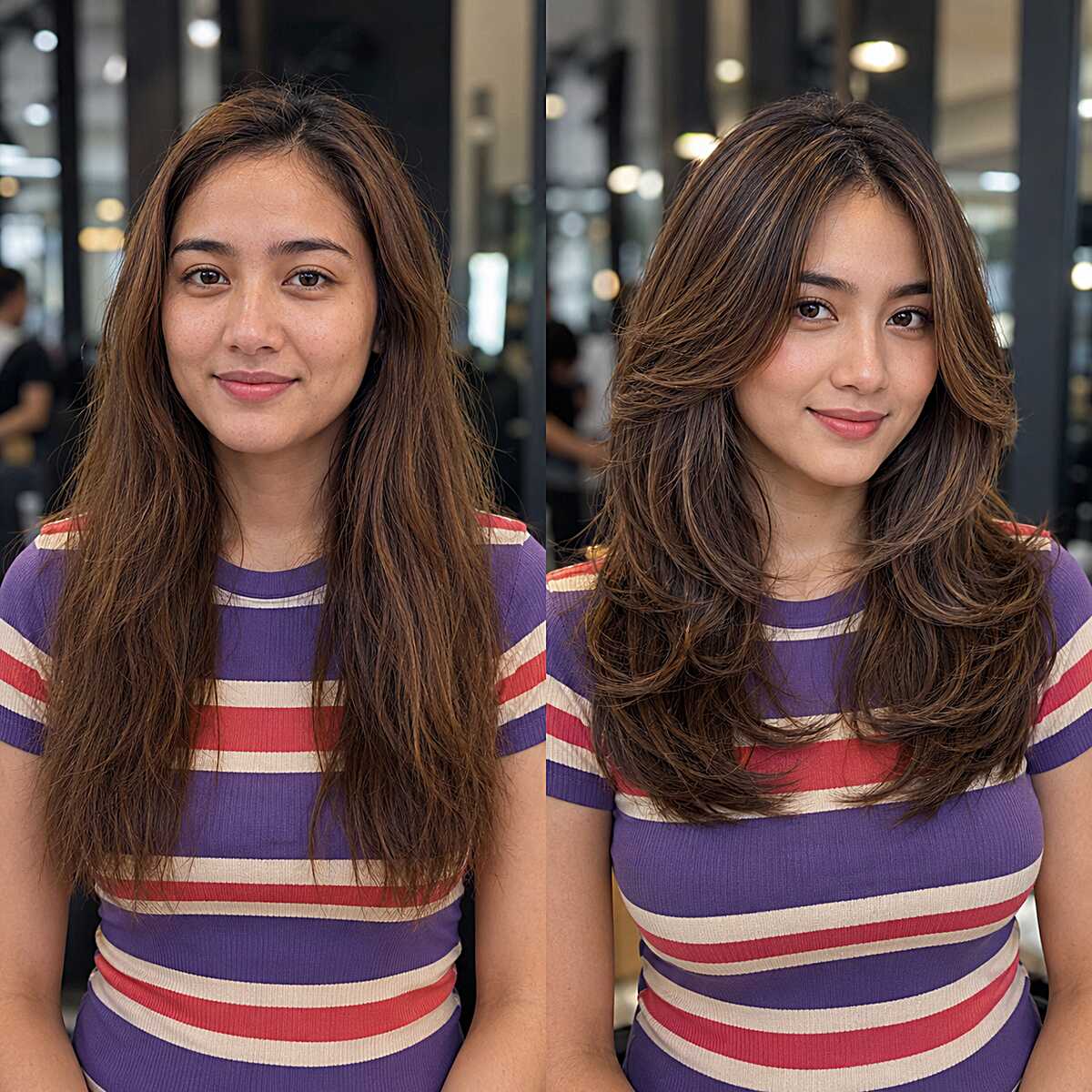

#1: Before and After Proof That Layers Can Fake Density
The photo depicts hair that is fine and grows flat against the body. There is no internal structure and is lacking in movement. The ‘after’ photo shows this same hair but graduated layers were cut and slide cutting was used to create voids in the mid-lengths without sacrificing body. This is crucial for hair that is fine – otherwise the hair will continue to cling to itself instead of moving freely. The shortest pieces frame the face and stop at the jaw to create outward movement. This is particularly advantageous for broadening the lower half of an oval face. This will not dry naturally to achieve this look. The volume at the crown and the rolled ends are a result of a round brush and dryer. Ideally, if this step is skipped the end result will look more similar to the left photo but with a more appealing shape. For straight fine hair, this cut is essential, however for coarse and thick hair, these same layers would result in uncontrollable volume instead of structure.
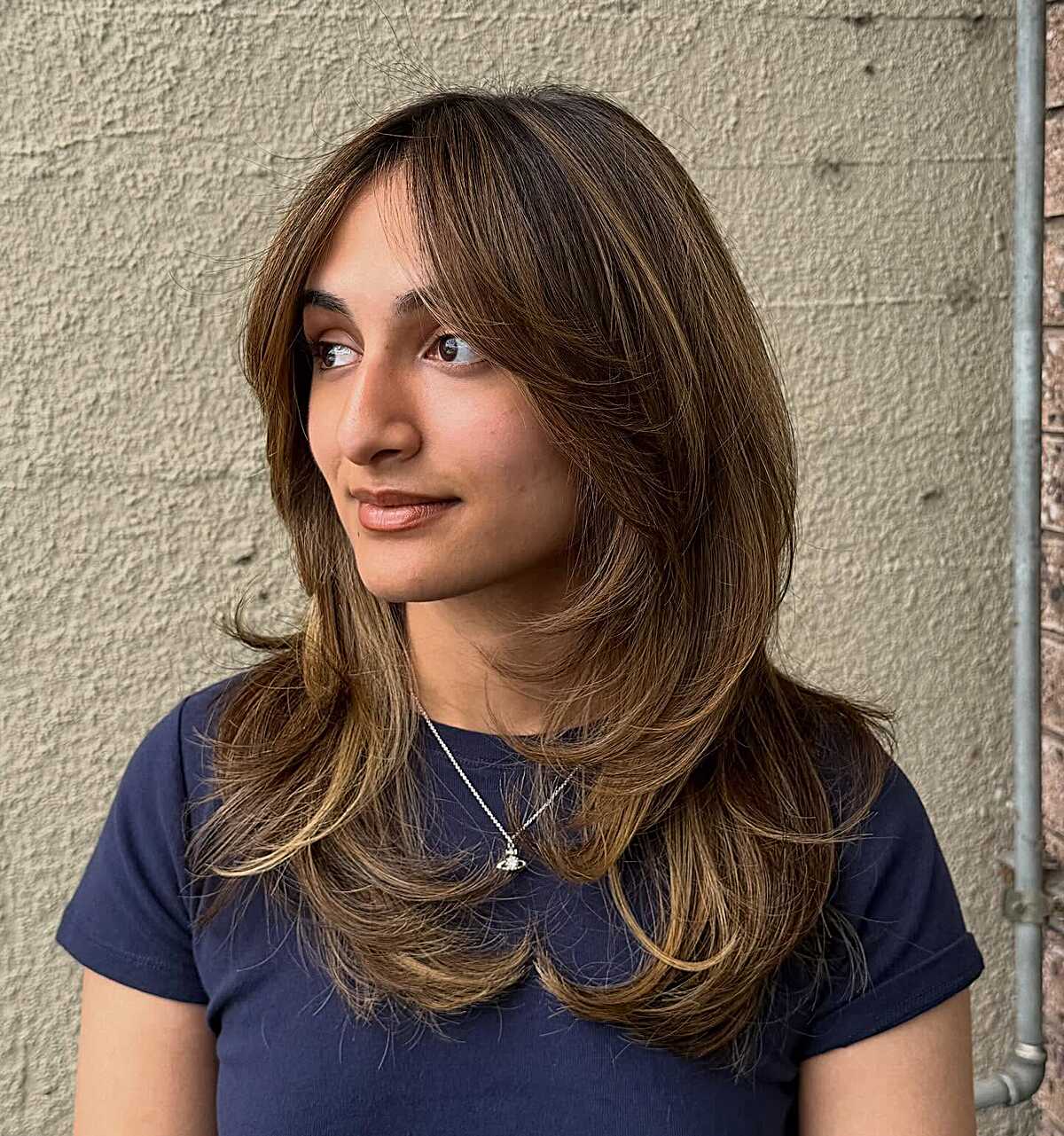
#2: Warm Brunette With Flipped Layers That Actually Hold Their Shape
Look at the ends. These curls are not flipped under or flipped over. Each layer ends at a different length and kicks out in a different direction. This creates a round shape and full silhouette. This hairstyle works with medium density hair at the most. The shortest pieces that frame the face are at cheekbone level, and really do a lot to soften an oval or longer face shape. The cut lives and dies by the blowout. If you don’t have a round brush, those ends are going to be flat, and the whole haircut will lose its shape. The point cut ends prevent them from looking heavy and blunt. There is a subtle caramel warmth that is lightly threaded throughout the lower lengths, and catches the light without being too much of a highlight. If you don’t plan on blow drying your hair, skip this haircut altogether.
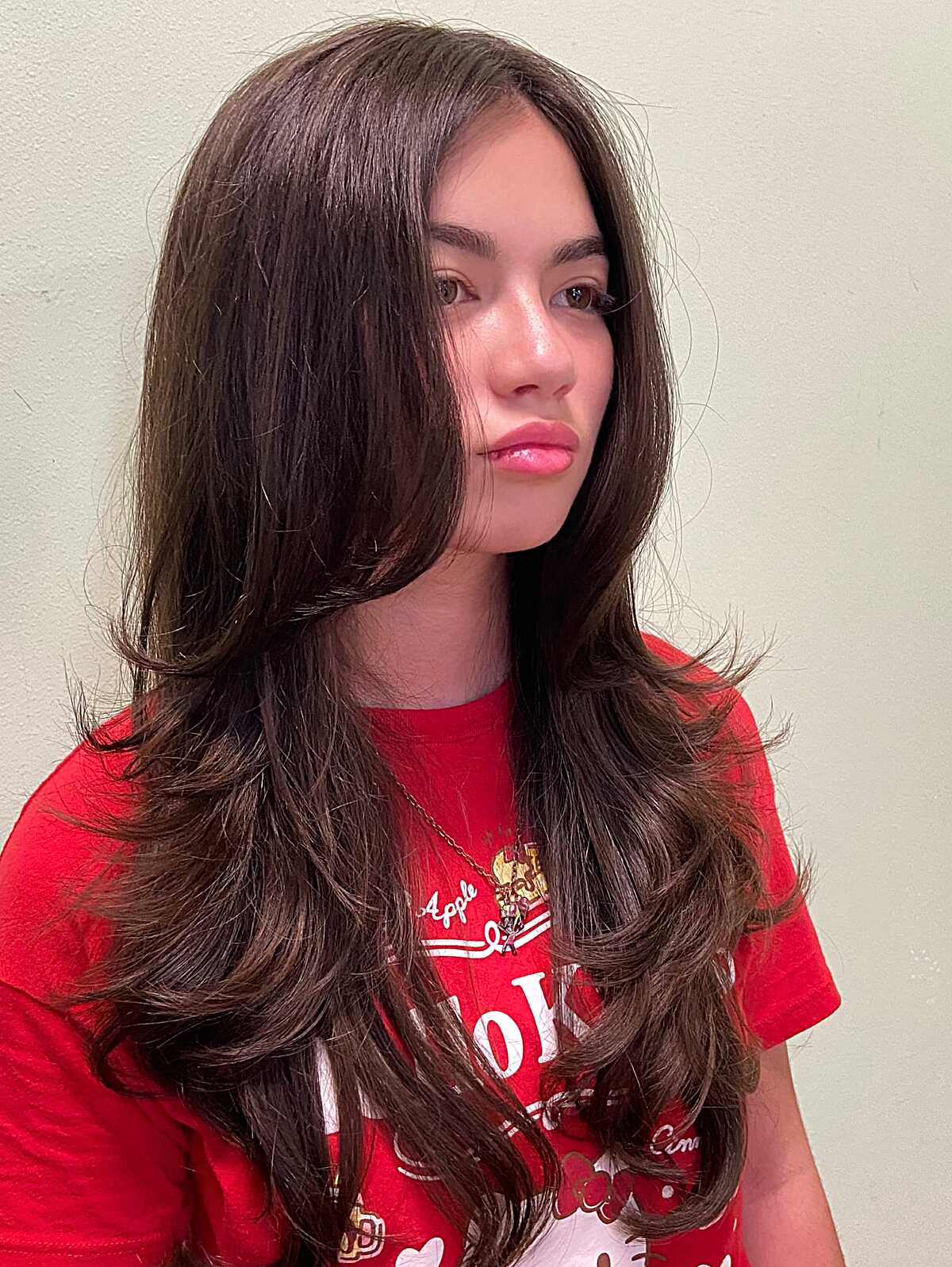
#3: Long Dark Brunette With Soft Interior Layers and Ends That Move on Their Own
The shortest layers of your hair sit right at the cheekbone and are more than likely doing the bulk of the work in this cut. They give a side-swept curtain look without a fringe so there’s no commitment and no awkward grow out. This is long hair of medium density with point cut interior layers starting from mid length and graduating downwards so that the perimeter stays full and the middle sections are free. See the way the ends flip out and in seemingly at random? That looseness is only created from layers that are light enough to catch air but are not so short that they separate into steps that are so short. If your hair is thick or coarse sure that’s cool but this is not going to lay this way without a lot of thinning done. Oval and oblong faces wear this well because of how the cheekbone layers widen the mid face. The natural dark brunette is left alone because there’s no color work, which keeps the texture honest. This cut will fall flat without a blowout.
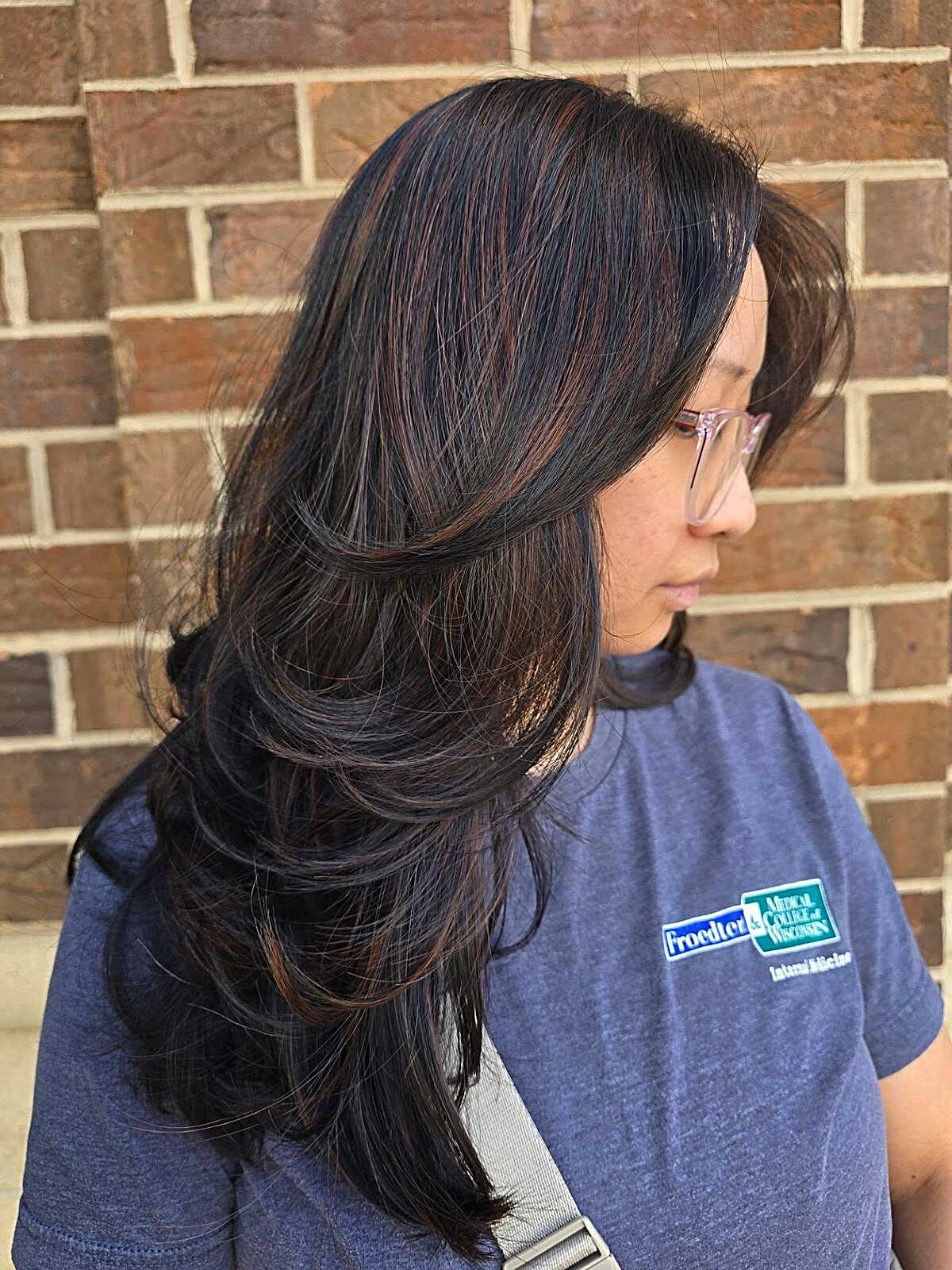
#4: Dark Layers With Hidden Copper Ribbons and a Whole Lot of Swing
Notice where the copper is placed. It’s not a balayage that goes painted from root to tip. It’s more like thin ribbons that are woven through the interior so the warmth only shows when the hair moves. That is intentional and helps a dark base not feel so flat without a visible grow out line. The cut is also long with stacked layers starting at about the chin, point cut through the mid-lengths to create that separated, feathered kick at the ends. This is medium density hair doing a great impression of thick hair because the layering builds volume exactly where it is needed most. Fine hair will not hold these flipped ends without a lot of round-brush work every time they wash their hair. Round faces benefit from this a lot because the side-swept face framing piece and the overall length pulls everything down. One thing to note is that the shortest layer is right at the cheekbone which stops the profile from looking heavy considering there is a lot of length below.
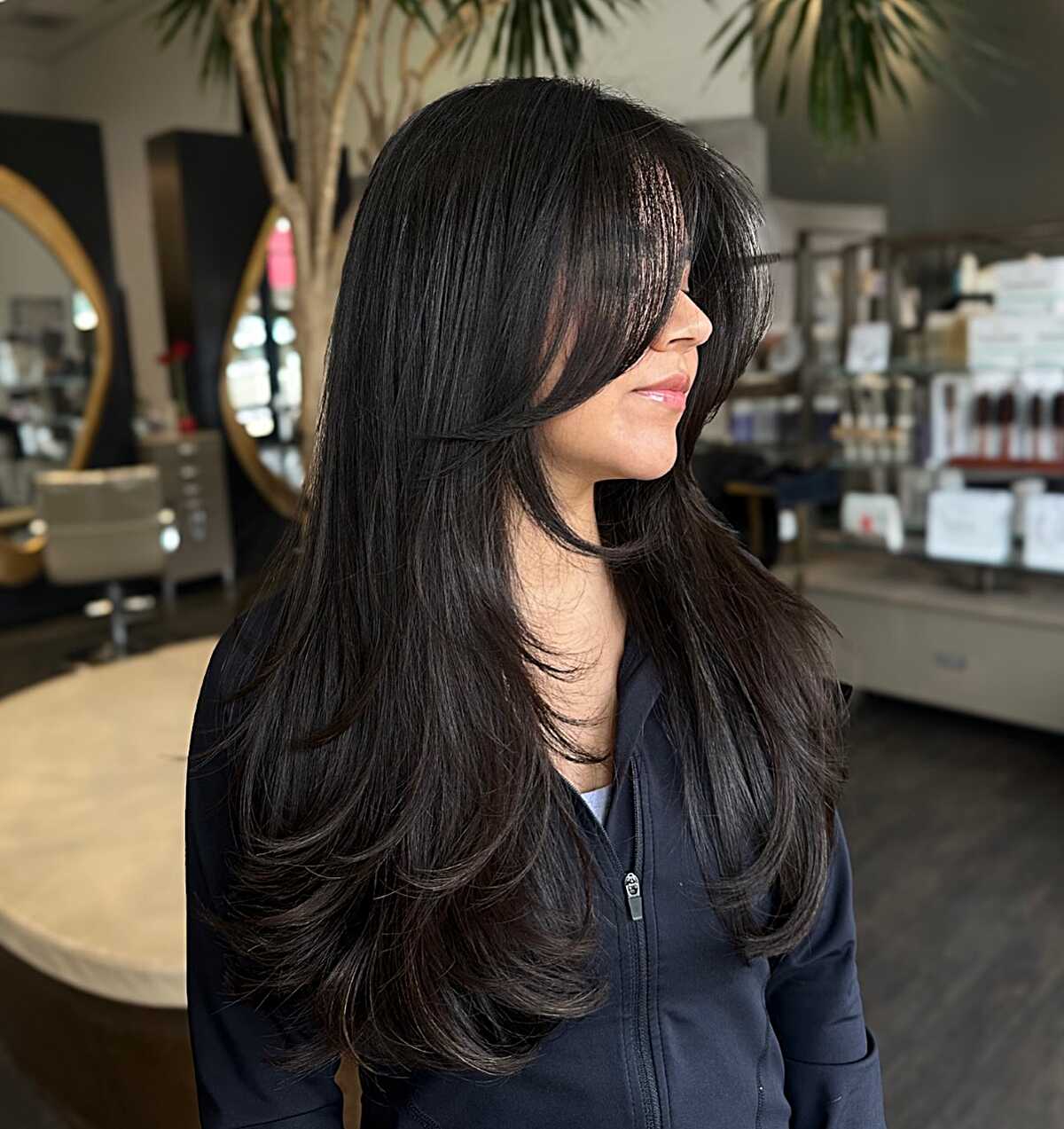
#5: Jet Black Layers With a Heavy Fringe and Feathered Lower Half
The fringe is thick, which is important because this article is about fine hair, and you need enough density up front to be able to go with a bang this full without it being see-through by noon. Look at how the weight is almost all in the top half while the bottom is all razored out into lightly, flipped pieces that look like they create movement even when the hair is straight. It’s a clever structure for someone with medium to thick hair who wants to look like they have less, not more, hair. With truly fine hair, those lower layers will be completely straggly and will look awful without a blowout and that is the only time they will not look awful. The fringe pieces naturally integrate with the face framing pieces, which is great for round/ wider shaped faces because it’s a nice narrowing effect. Darker, natural hair shows the layers’ dimension nicely, especially because every cut catches the light differently.
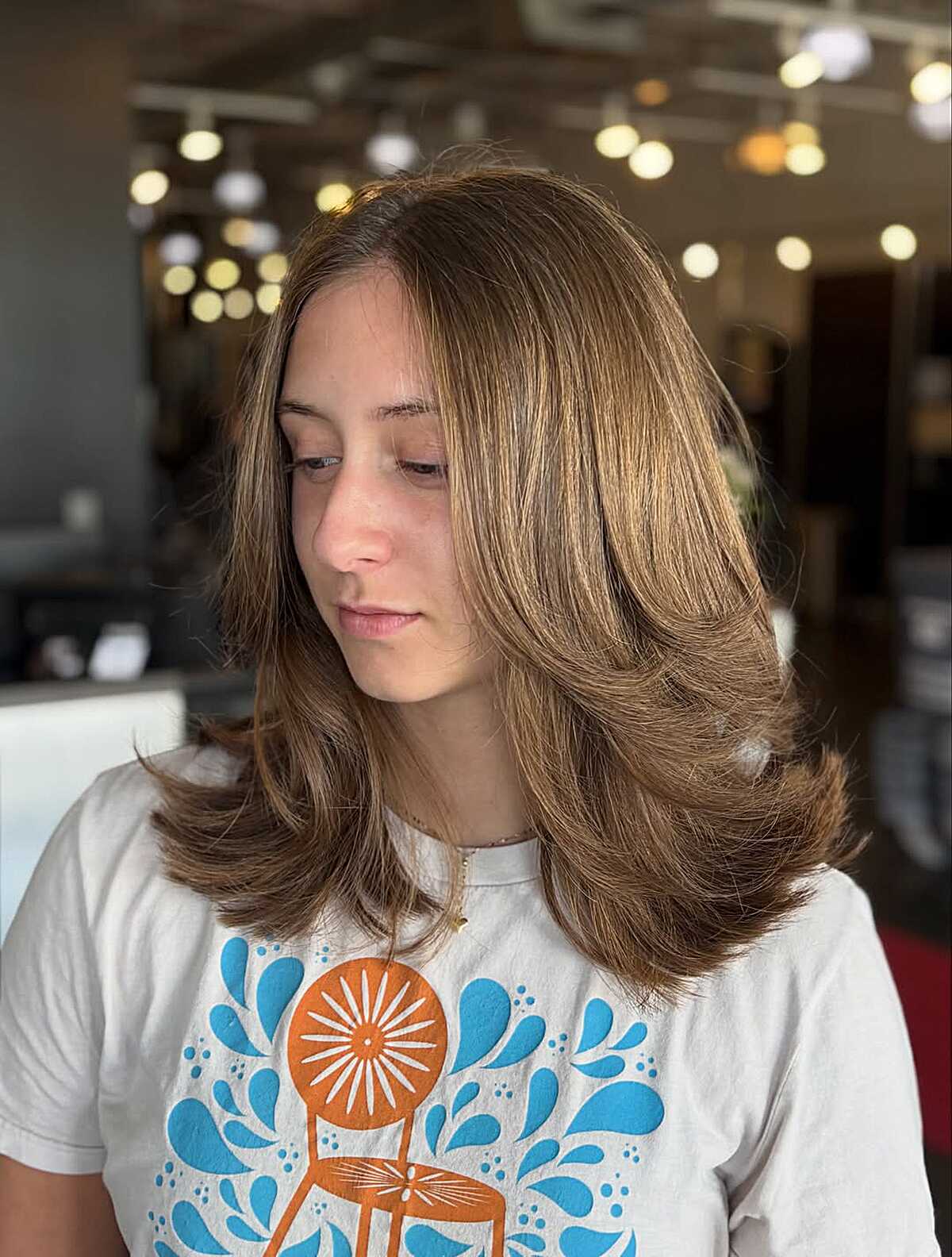
#6: Medium Caramel Brunette With Rounded Layers and a Center Part That Pulls Its Weight
The ends are talking. Notice how they all flip outward and give a wide appearance at the collarbone, which really makes fine, medium-length hair transform from looking flat to looking full. The interior layers are slide-cut and closer together than you think, so, there won’t be any gaps showing through. The roundness on the ends won’t air dry like this. That rounded shape is from a round brush + blow dry and that’s not going to change. This is warm caramel brunette without highlights, just single-process color reflecting beautifully in the salon light. Oval and longer face shapes will gain the most from the width this offers. If your face is round, then all that outward volume at the jaw will be a negative.
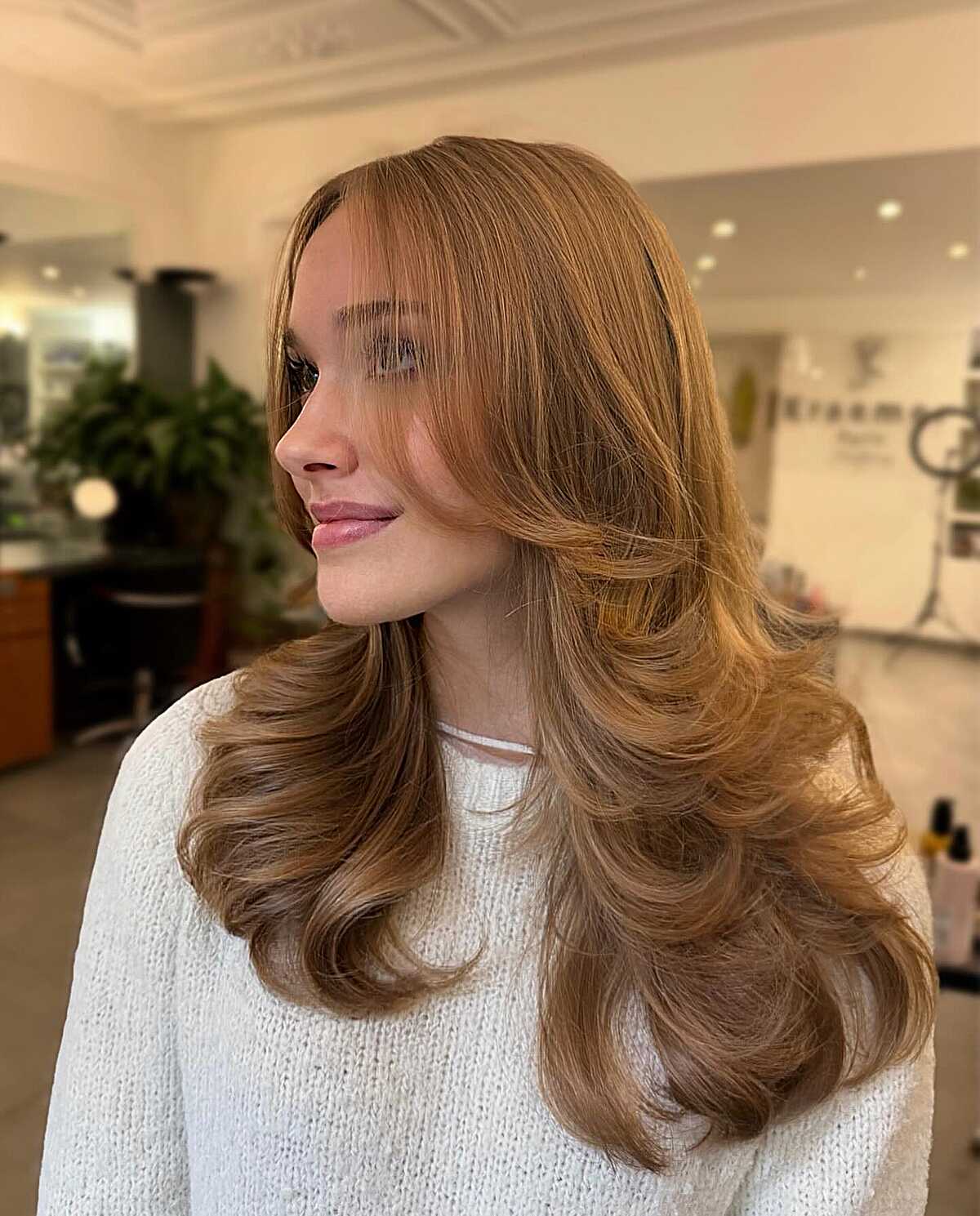
#7: Warm Strawberry Blonde With Rolling Layers and a Round-Brush Finish
This will not look like this without a blowout. Especially, for the big curled ends to look like this, you would also need a large barrel round brush and controlled tension. Otherwise, you will end up with soft, flat layers that just hang straight. The cut itself is long with face framing pieces starting around the cheekbone and interior layers from the mid-lengths down all the way point cut to make sure the ends aren’t looking too blunt or heavy. What stood out to me is the overall density in the bottom third of the hair, which tells me this person probably has medium to medium thick hair and definitely not fine. Those rolled ends on genuinely fine hair would collapse in a matter of hours. The color appears to be a warm strawberry blonde with looks like a single process or a very seamless tonal gloss, and then nothing else, no highlights or balayage, just one solid color all throughout so she can keep it shiny and healthy. That kind of warmth suits light to medium skin tones with warm or neutral undertones. Oval and heart face shapes wear this framing well. If your hair is thin and you want volume that lasts past the parking lot, then this is the wrong reference photo to bring to your stylist.
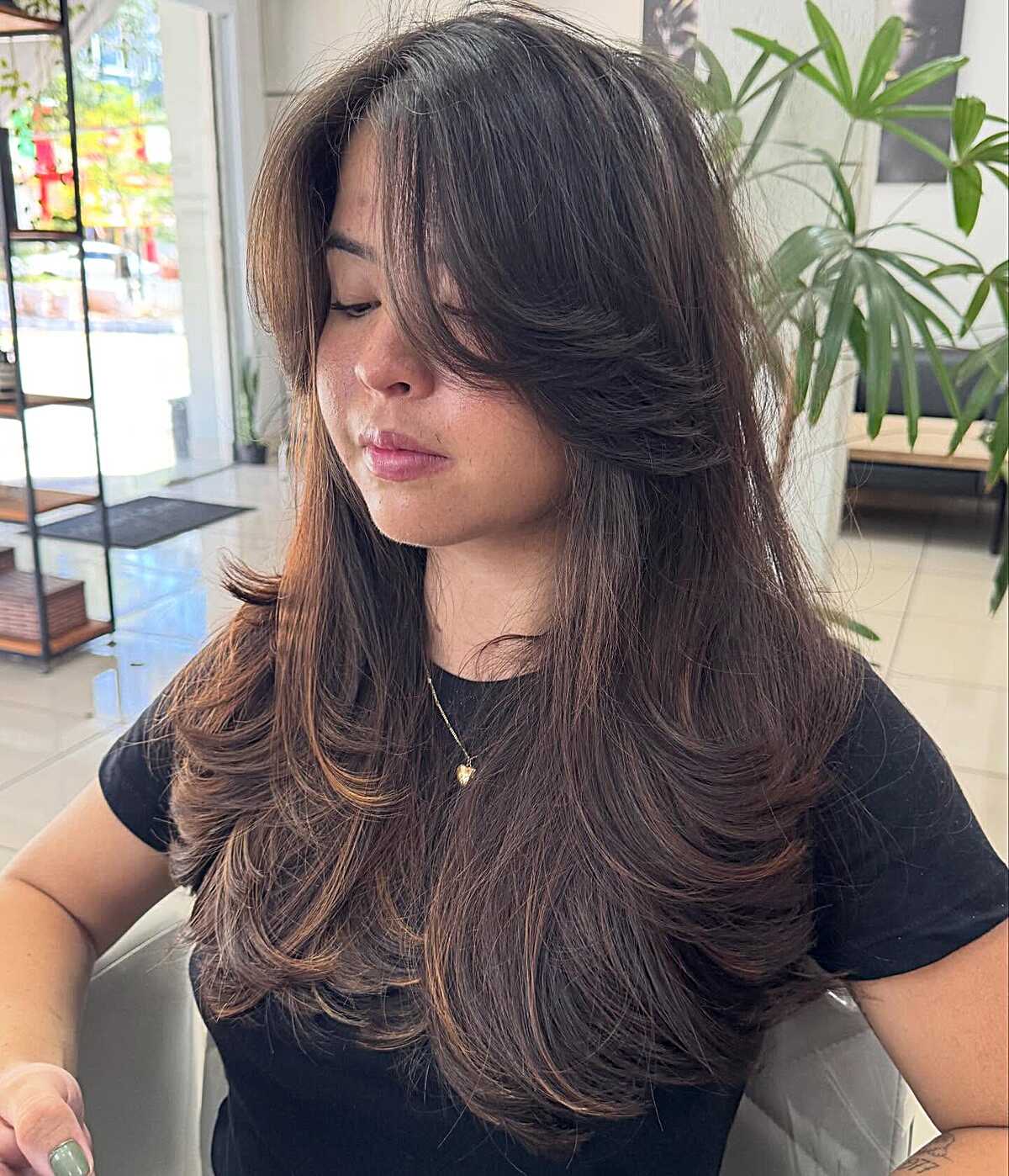
#8: Dark Brunette Feathered Layers With Crown Lift and Swept Curtain Fringe
Notice where the volume is sitting. The volume is evened out at the crown and through the mid lengths, which tells you the interior was heavily layered with a razor or point cut to remove weight up top and keep density at the bottom. This is a clear option for medium to thick straight hair that tends to lay flat against the head. The curtain fringe is long enough to merge with the face framing pieces, and it’s doing real work narrowing a rounder face shape here. This cut would go limp within an hour on fine hair. It needs enough natural density to hold those flipped ends without collapsing, and it absolutely needs a round brush blowout to look like this.
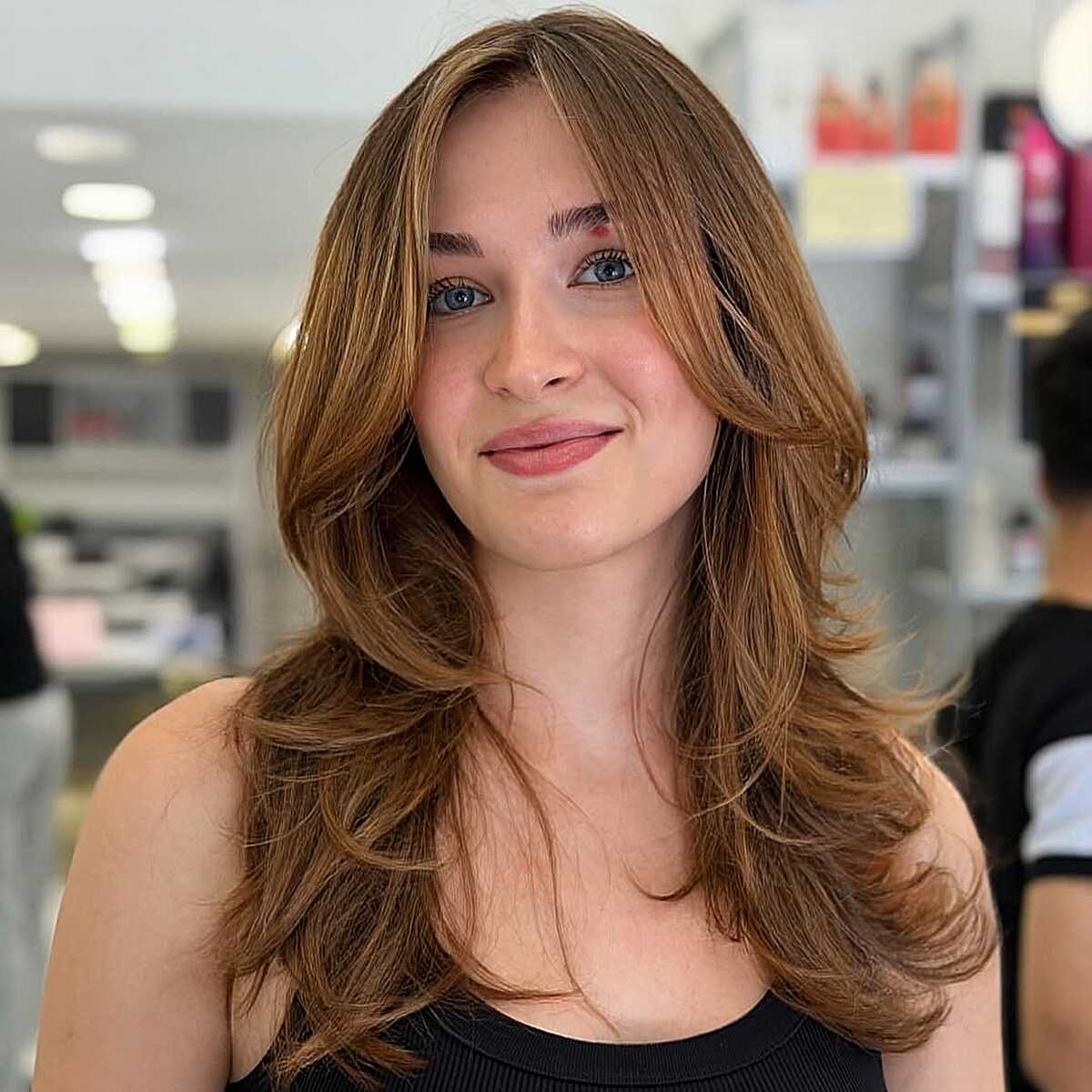
#9: Golden Bronde Butterfly Layers With Soft Curtain Pieces and Lived-In Ends
Notice that the shortest layers hit the cheekbones and go outward. That’s what adds width to the hair and is great for long or narrow face shapes, but quite wrong for round faces. This is a butterfly cut on medium density fine to medium hair, chest length, and it has been point cut through the layers to eliminate hard lines. The warm bronde is a single process gloss or demi over her base, and gives a natural appearance. Most people won’t notice that the ends are barely styled while the mid-lengths are voluminous, which means only the top section needed to be round brushed. The flat part will definitely fall after about two days, and fine hair at this length loses its fullness fast without product or heat, and no amount of layering will fully fix that.
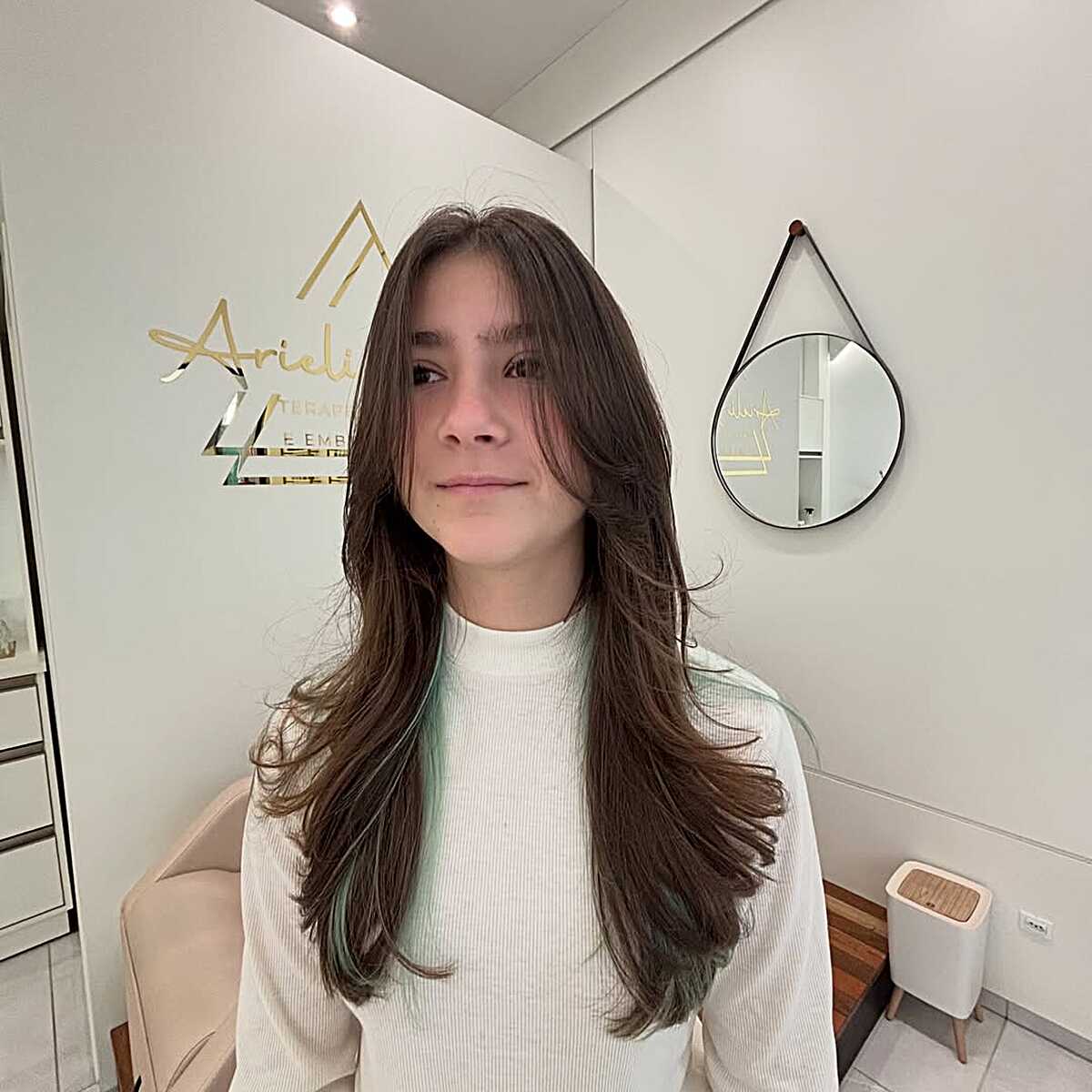
#10: Long Dark Layers With Curtain Pieces That Barely Try and Still Work
The shortest layers here are around collarbone hair length, & they do almost all the work. Without these layers, this hair would just be long hair. The face framing pieces split unevenly so one side is a lot heavier than the other side & it keeps it from looking staged. The color is untouched dark brunette, & that simplicity is why the cut looks so clean. This will not hold up on anyone with thick coarse hair because the ends would bulk out instead of tapering, so the sweet spot is fine to medium density. Those long curtain pieces are so round faces really get help from those long curtain pieces narrowing the front, & the interior layers mid-lengths were point cut to remove weight & not create visible choppiness. That’s the trade-off. Air-dried, this cut goes flat.
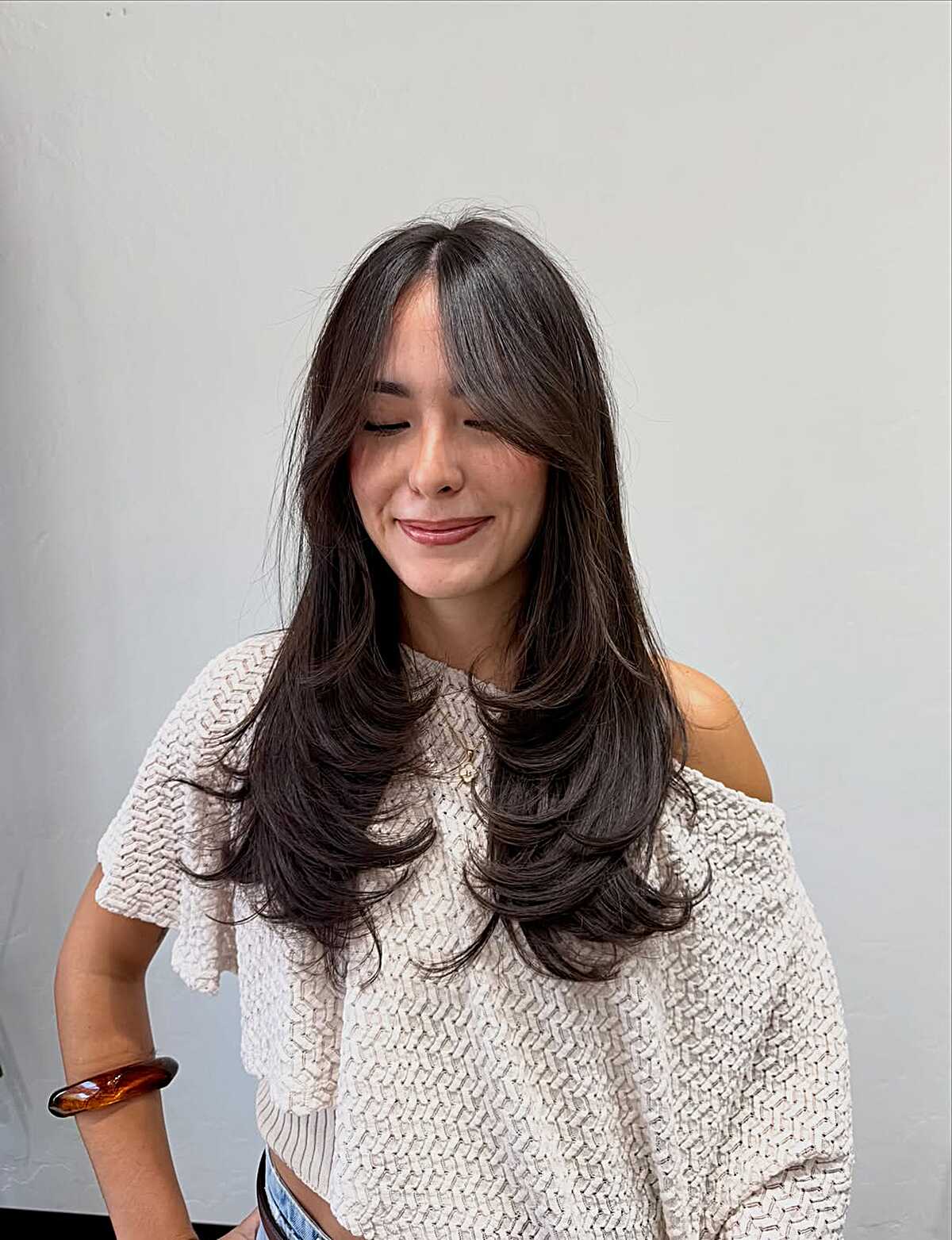
#11: Dark Feathered Layers With Curtain Pieces and Round-Brushed Ends
These ends won’t look like that without a round brush. That almost has to be said outright because the ‘payoff’ of this specific cut lives in the curled-out finish at the bottom and if you air dry then you’ll get something that looks a lot more flat and less intentional. The layering starts around the chin with soft curtain framing pieces and drops through some graduated lengths that were point cut to take away bulk while maintaining fullness. If you look closely you’ll see the interior layers are doing most of the work to create that lifted shape through the mid-lengths while leaving the perimeter long. It’s best kept natural dark brunette, no color, which keeps it low maintenance on that front at least. This is a strong cut for fine to medium density hair on oval or oblong faces because the width at the bottom counters the length nicely.
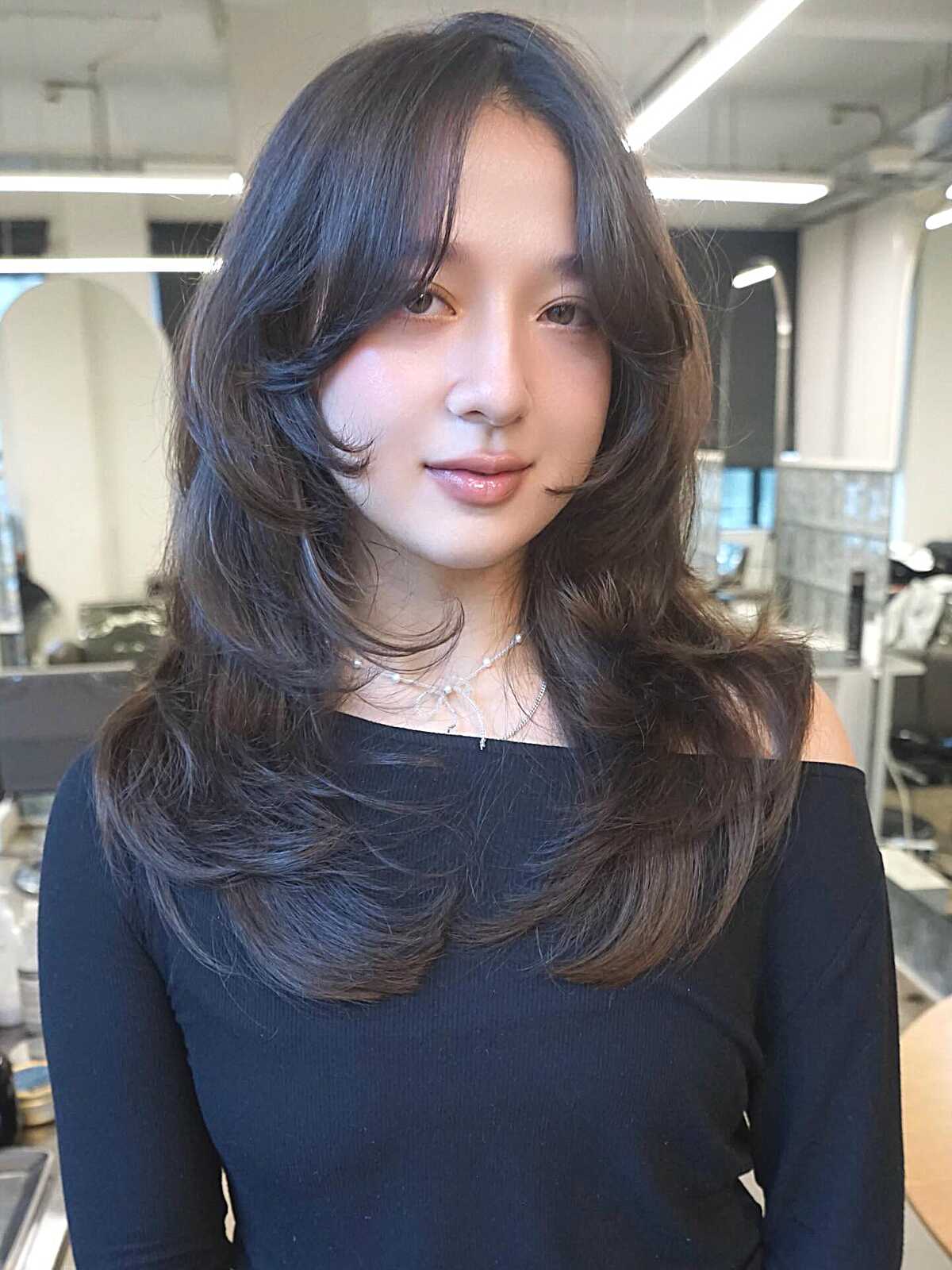
#12: Dark Layered Blowout With Curtain Pieces That Earn Their Keep
Take a look at how much space there is at the collarbone. That space is what makes medium-density hair look voluminous and airy without any color. The cut uses long internal layers starting at the cheekbones, with the front pieces point cut so they break apart instead of clumping together. This will not air dry like this. You will need to use a round brush, some tension, and spend a solid 20 min of your time to achieve those rolled ends so they sweep out and stay put. The pieces at the jaw are quite useful on round faces as they help elongate the appearance of the face. Long dark hair can become quite flat at this length, and the layering here prevents that. Don’t get this if your hair is fine and sparse because these layers need enough hair to fan out. If not, you will just have thin wisps where the volume should be.
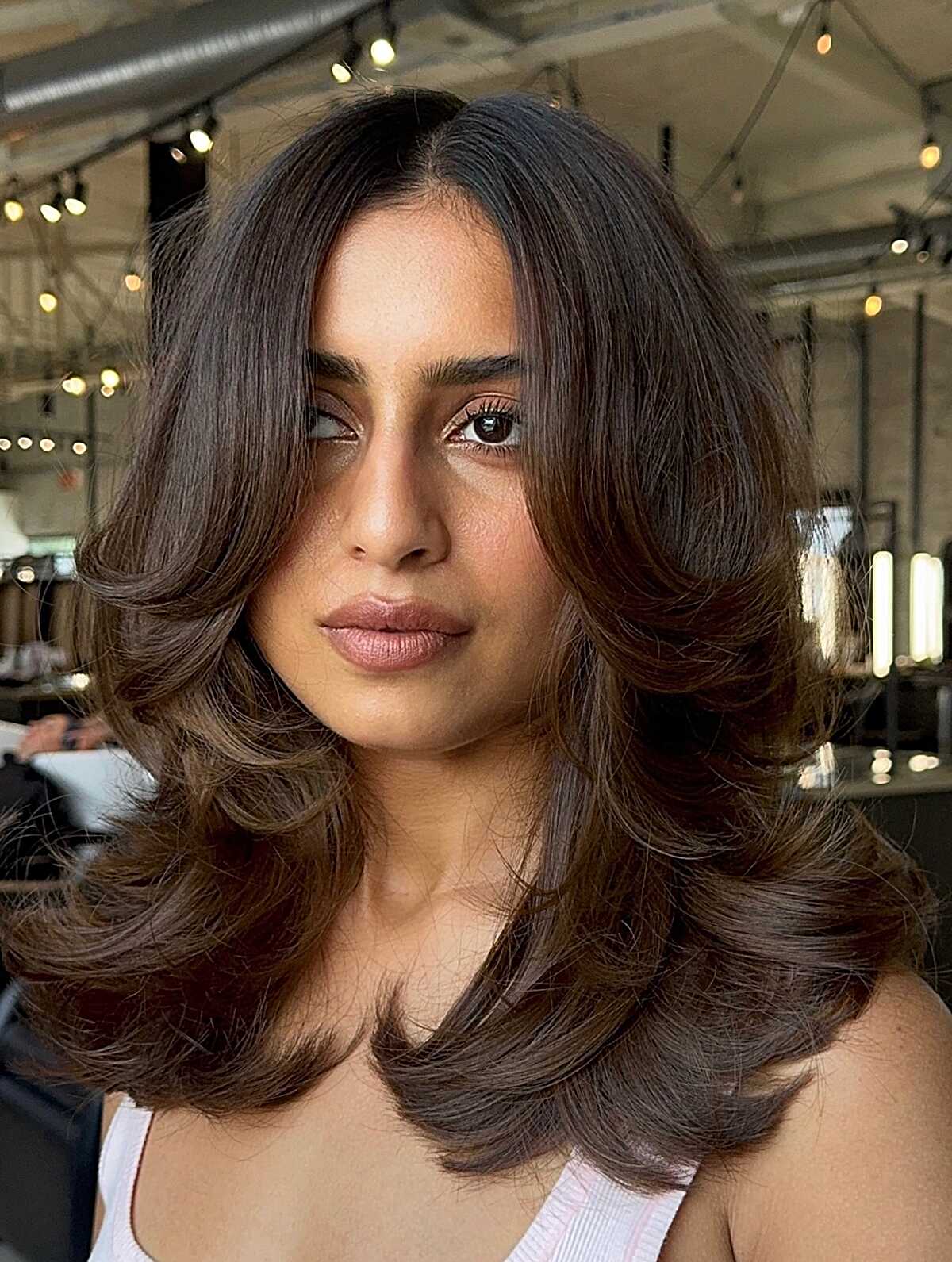
#13: Blow-Dried Brunette Layers With Big Curled Ends and Serious Volume
This look will not be achievable without the help of a round brush blowout and that needs to be clear before anything else. The layers here are cut through the mid-lengths and heavily around the perimeter, point cut to remove weight so the ends will kick out and hold that rolled curl and with fine hair that movement reads as added fullness that you really don’t have. You can see that the volume is mostly from the cheekbones down, and not from the roots. This means the density is moderate at best and the styling is doing most of the work. This is a warm medium-length single-process brunette with no color lift and just healthy depth. This type of hair looks especially good on round and oval faces because the width of the curled ends balances out a longer face nicely however, if your face is wide to begin with, this hair will just add inches that you don’t want. On a wash-and-go day, this cut will fall flat and stringy.
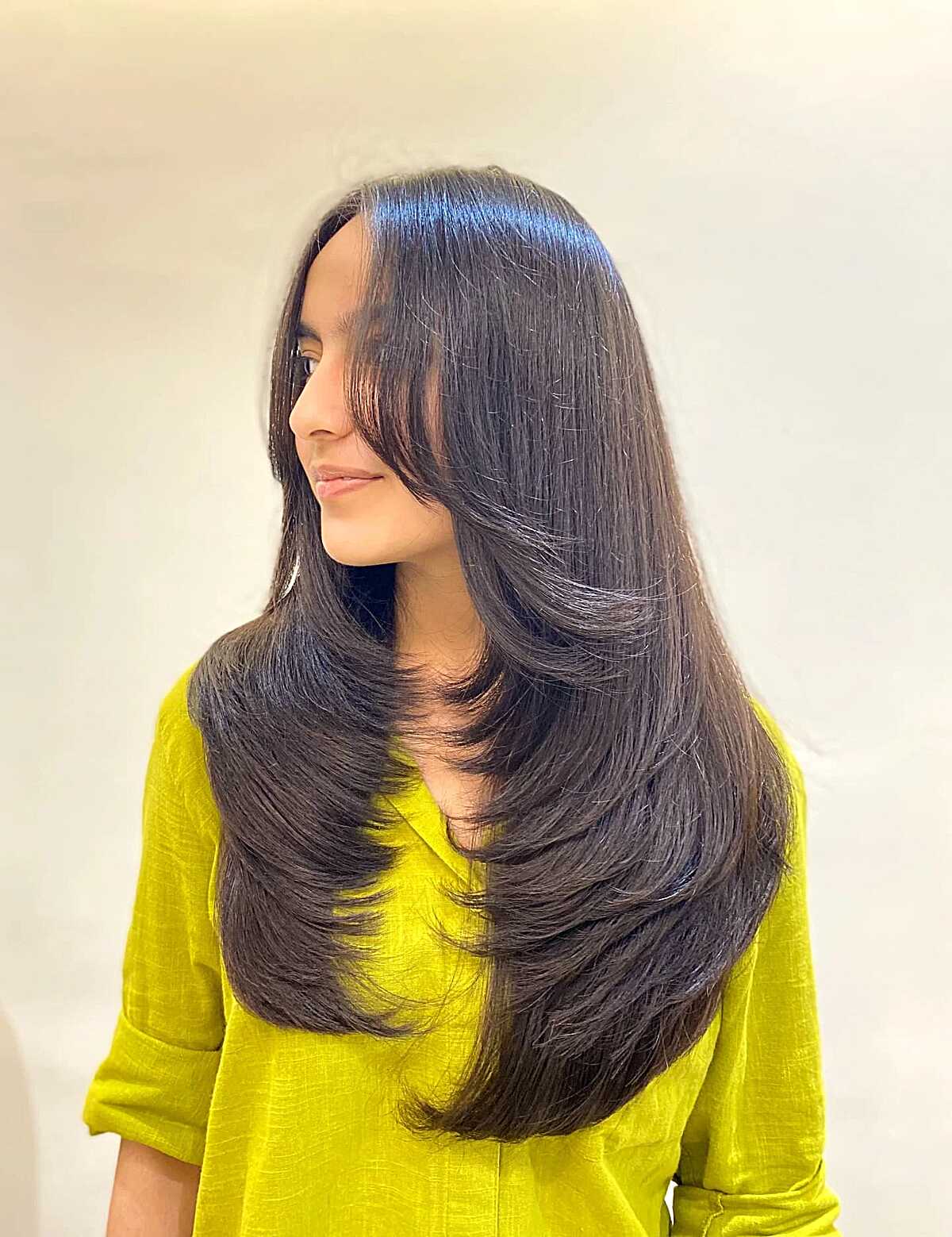
#14: Long Feathered Layers With Flipped Ends
Check out how the ends kick out. That’s not an accident. That’s long inner layers cut using a specific sliding technique that removes weight at the cut so the hair fans out instead of hanging flat. This client has medium to thick density, which is really important because on genuinely fine hair this much layering would thin the ends out to the point of looking scraggly. The longest pieces reach past the collarbone, and the shortest face-framing layer starts around the chin, giving the whole shape a wide rounded silhouette. This shape suits oval and oblong faces really well, but round ones, not so much. The natural dark color here is doing a lot of work because it helps the light catch the movement without any distraction.
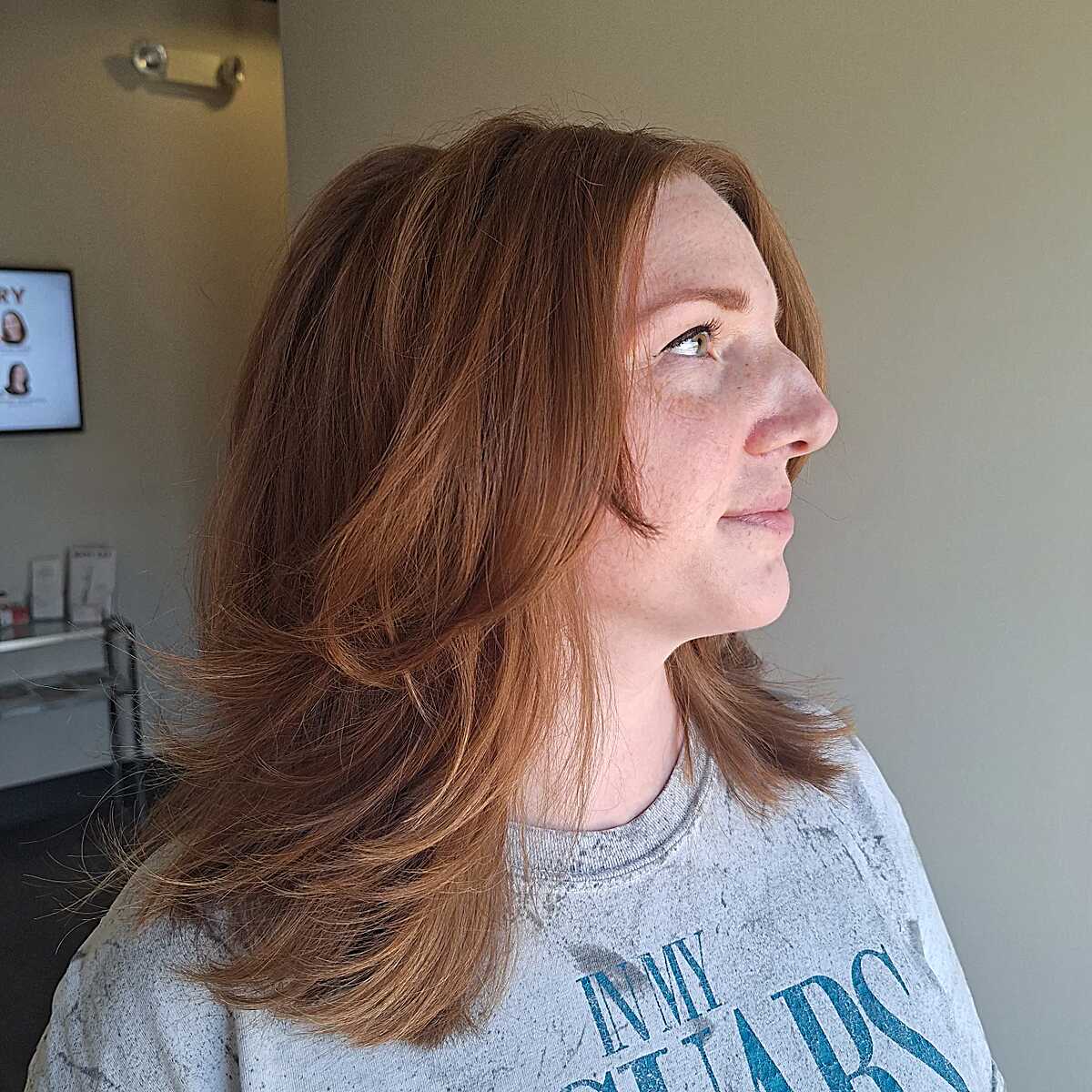
#15: Natural Copper With Razored Mid-Lengths and a Quiet Face Frame
The shortest layer is right on the cheekbone, and that’s doing all the work. See how little structure there is around the face versus the movement around the mid-lengths and ends? This is what looks like a razor cut layering job done on fine, straight to slightly wavy, mid-length hair. The texturing is kept deliberate but not overdone. The natural copper tone is warm and unprocessed, meaning no color upkeep. Round and fuller face shapes are flatter with this particular layer placement as it tends to draw the eye more diagonally. On air dried days, this cut will fall very flat though. it does need a blowout to keep the body you see in the photo, and fine hair always loses volume by the afternoon regardless of what you spray in.
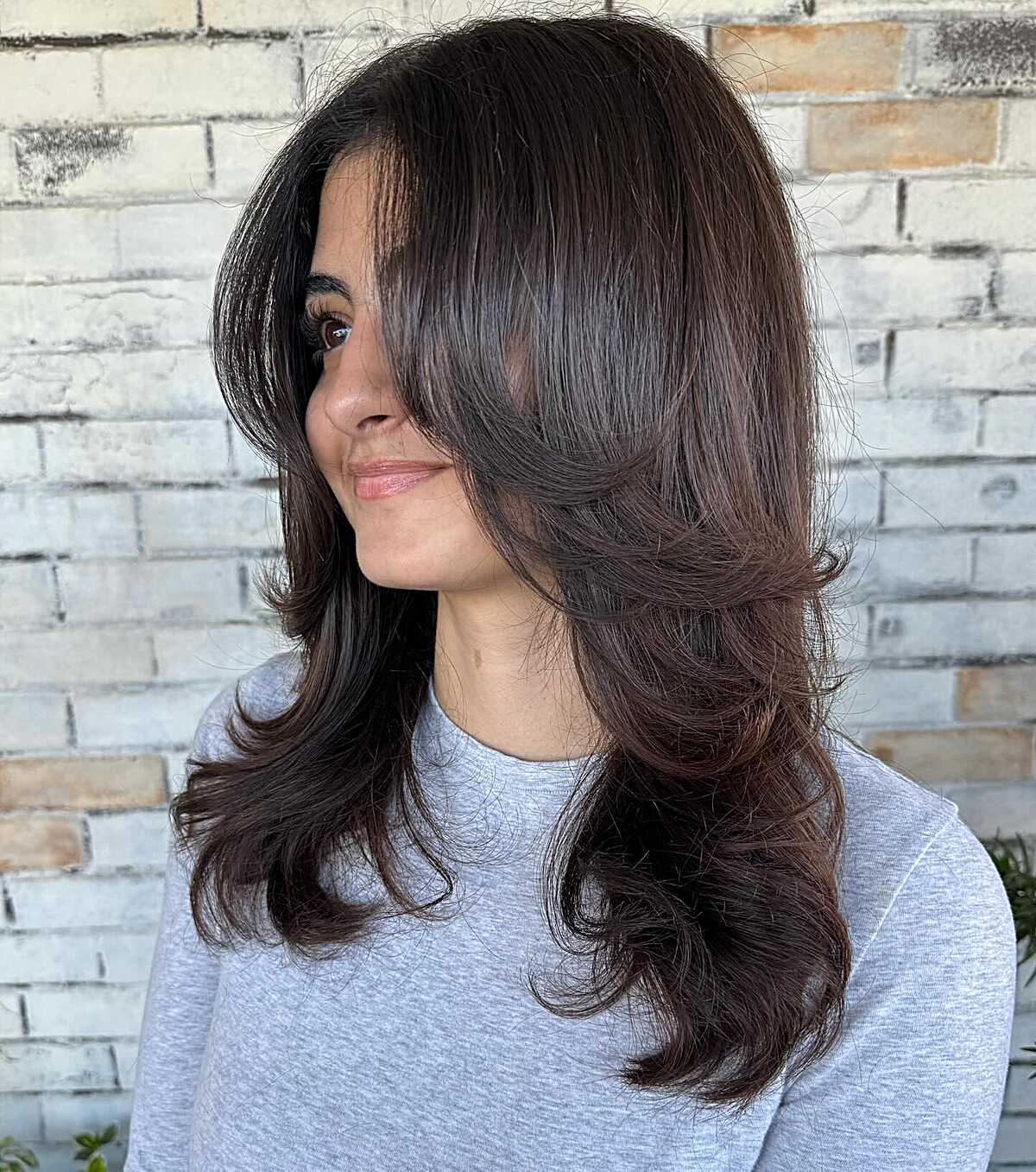
#16: Dark Brunette With Cascading Layers and Curved Ends That Need a Round Brush
This cut will go flat and not a maybe. The volume through the crown and those flipped, curved ends are totally styled in, built with a large round brush, section by section, and on fine hair that movement will def fall by the afternoon unless you set it with something. What I notice here is how the shortest face framing layer sits right at the cheekbone and kicks away, which is doing real work to keep a longer face shape from looking narrow. The layers are point cut and graduated from chin length down to the long ends, creating that stacked separation through the mid-lengths without thinning the perimeter. Medium to fine density, long length, natural dark brunette with no color work needed. Oblong and oval faces benefit most from that cheekbone layer. If you won’t pick up a round brush, don’t do this one.
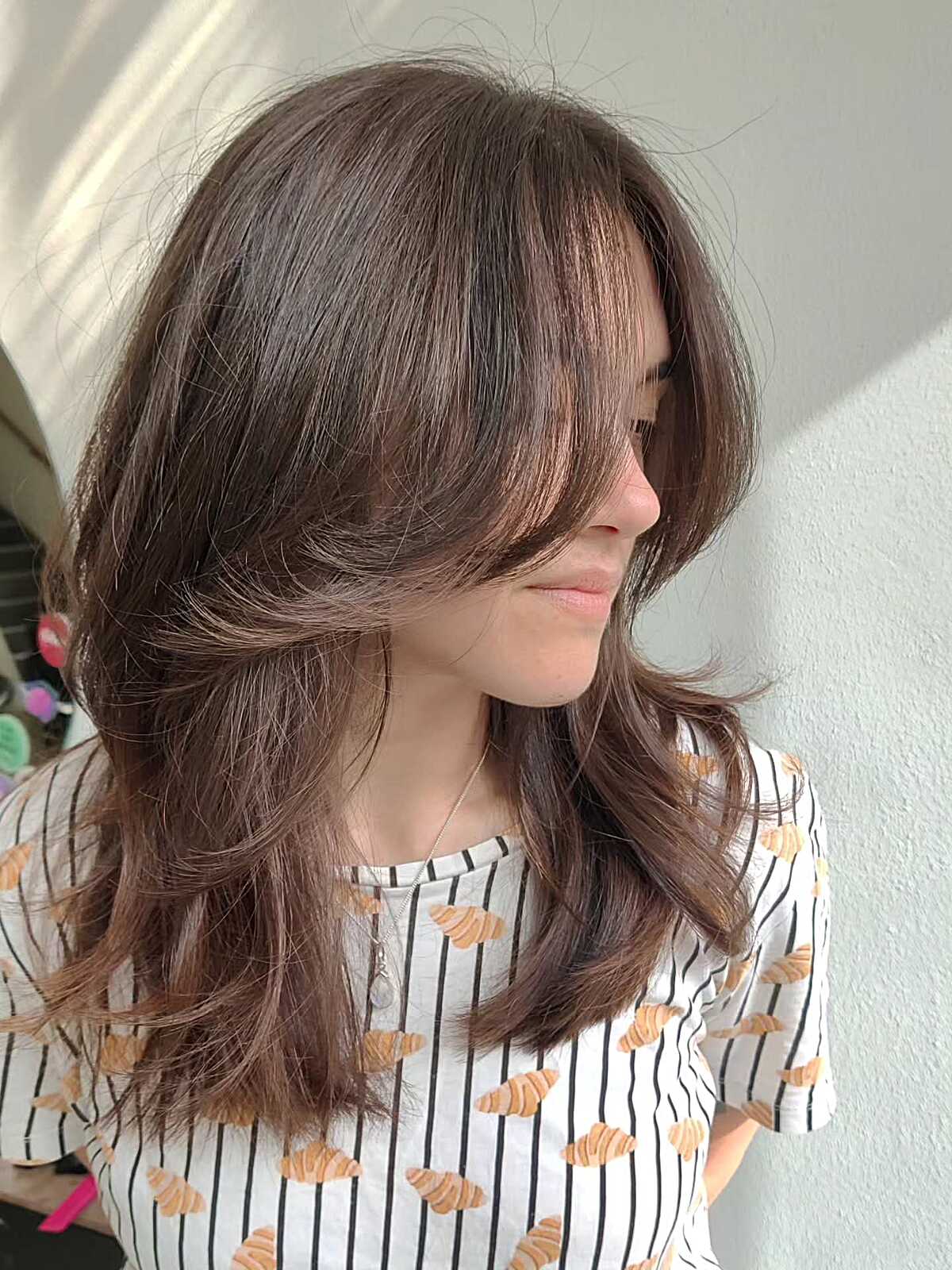
#17: Medium Brunette With Wispy Interior Layers and Face-Framing Pieces
The shortest layers hit the cheekbone, and the rest of the layers fly away and down. That’s point cutting through the interior, and it’s doing all the work here. This is medium-length hair, fine to medium hair density, a cool natural brunette, and the layering makes the hair look more full and balanced without removing weight that is the most needed. The ends of the hair softly flip out, so I assume a round brush was used, and this will not stay if your hair is pin straight and has no wave or curl to it. Don’t expect to get this look. Oval and heart face shapes will get the most benefit from having those long curtain layers fall past the jaw. For girls with rounder faces, those pieces need to be shorter, or they will close everything in. It’s a bit of a shame that those mid-shaft layers don’t fully come to life in a single process flat hair color because there seems to be some natural subtle warmth in them.
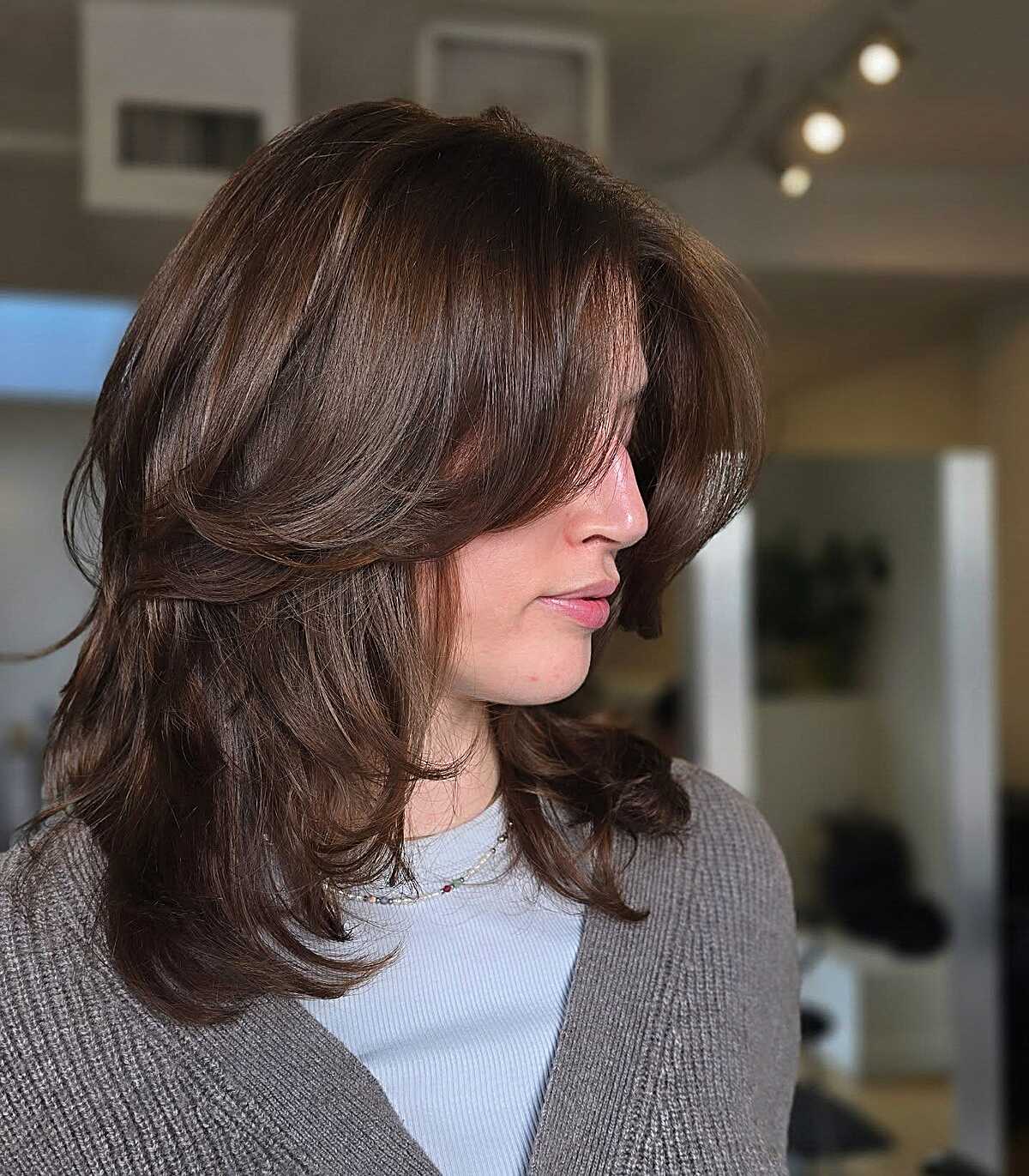
#18: Rich Chestnut Layers With a Curtain Fringe That Does the Heavy Lifting
The fringe has done a lot more than it looks like. The hair has been cut heavily enough at the front, deceiving people into thinking that it is thicker there, when it’s actually fine. The layers at the crown are cut very close to each other which builds volume where low density hair tends to collapse. This is a product of a blowout. Without the round brush, these layers will lie flat and will separate and expose the thinness instead of hiding it. The warm chestnut tone helps the hair because a single-process brunette will reflect light evenly, unlike highlighted hair. This helps to make the hair appear thicker. This cut will work well on oval and heart-shaped faces, since the curtain fringe will soften the width at the forhead and will not shorten the face. If you like to wash your hair and go, then this is not your cut.
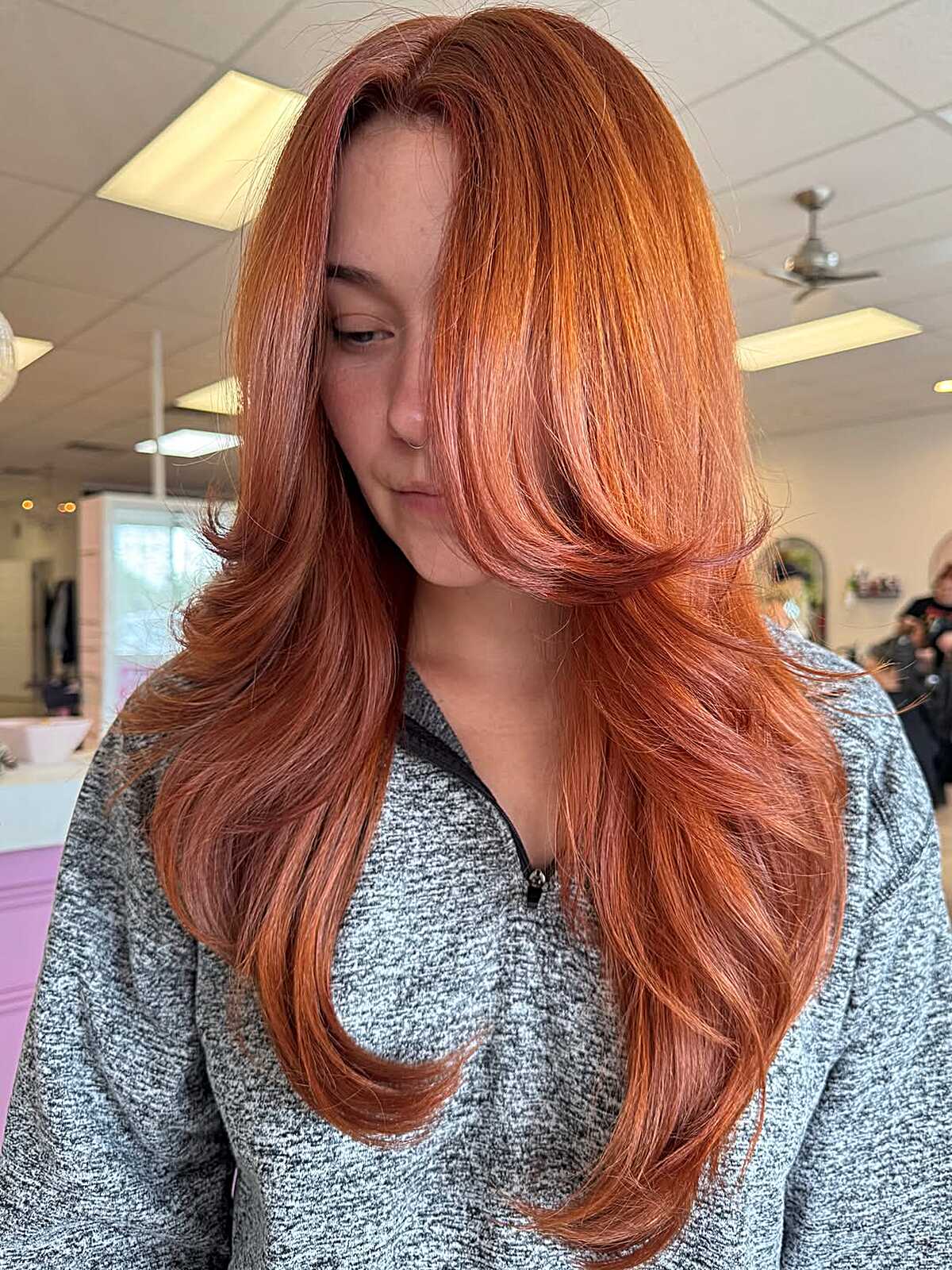
#19: Copper Feathered Layers With Curtain Framing on Long Hair
That copper color is doing a lot of work here and it’s earning it. The upkeep looks real and frequent. About every four to five weeks, no exceptions. The layers start around the cheekbone with long face-framing pieces that sweep outward, then graduate down through the mid-lengths with point cut ends that give the bottom half that feathered separation fine hair needs to not look flat. The crown area has some shorter interior layers creating lift without any teasing/backcombing, which tells you the cut itself is giving that volume. Round and fuller face shapes benefit from the way those front pieces break up the width. This will not air dry like this. You need a round brush and a dryer to get those ends to kick and hold.
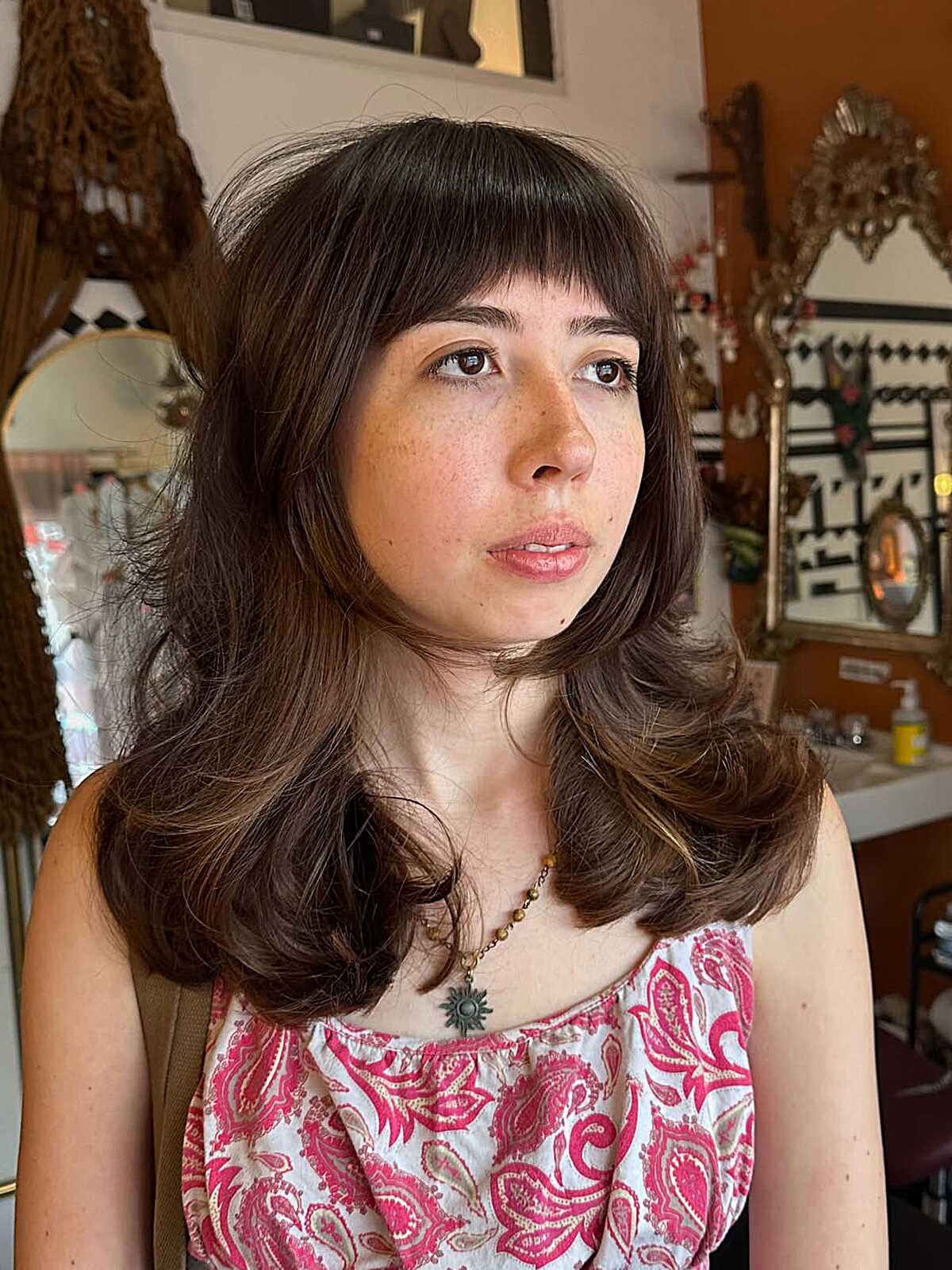
#20: Warm Brunette Butterfly With Full Fringe and Rolled Ends
All the work is done by the ends which are rolled out with a round brush so that the ends create a look of double the density, which is perfect for medium to fine hair at this collarbone length. The shortest layers sit at the cheekbone and fan out from the face, and the bangs are cut straight and heavy enough to anchor everything above. This is a butterfly cut with some real commitment to the interior layering and not just a couple of pieces face framing. It’s all about even where there is not too much of it. The one thing that nobody tells you is that this shape collapses without a blowout. It will not air dry into anything like what you see here. Round face shapes should think twice because the width at the jaw adds even more fullness there. For oval or longer face shapes and fine straight to slightly wavy hair this is one of the best cuts for creating a body that actually holds a style.
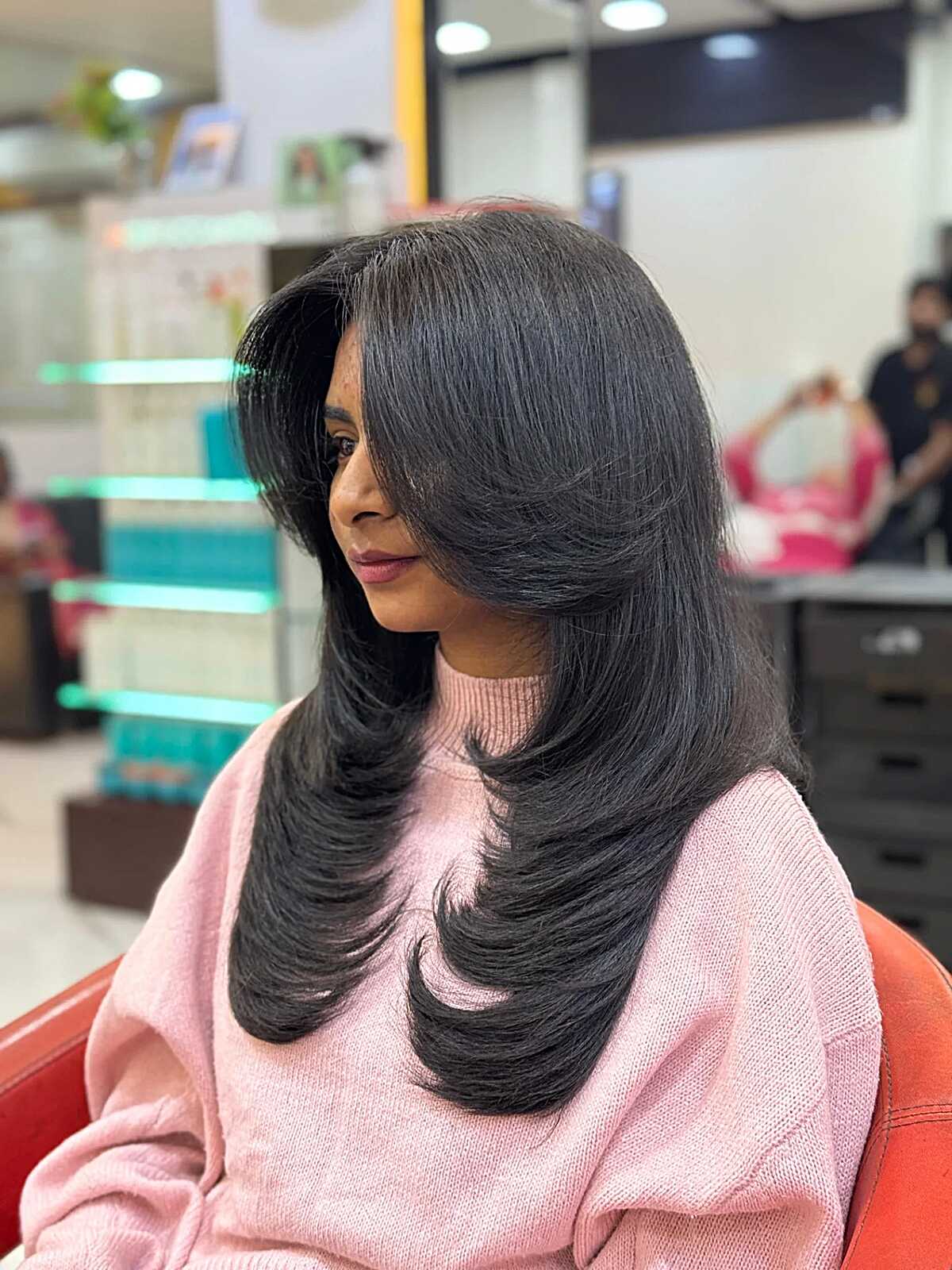
#21: Swept Black Layers With Serious Blowout Commitment
A round brush will be essential for the style shown here to make the ends round. It must be stated that these graduated feathery ends are entirely styled in. The cut does not include these turns. The layering initiates almost at the top with a long fringe off to the side that integrates into the first layer, and the point cutting through the mid-lengths is what keeps the ends thin enough to flip without looking bulky. On fine or medium density hair at this length, the stacking effect creates the illusion of volume where there isn’t any. It is most suited to those with oval and oblong face shapes as the volume looks best around the jaw and shoulder without excessive height. The deep natural black color is the client’s natural color and lacks any added dimension to it, which in person, makes the layering less visible than in the salon photo where you can see the light reflecting off the layers. If you do not want to have to heat style the hair to get the shape, it’s best to avoid this cut.
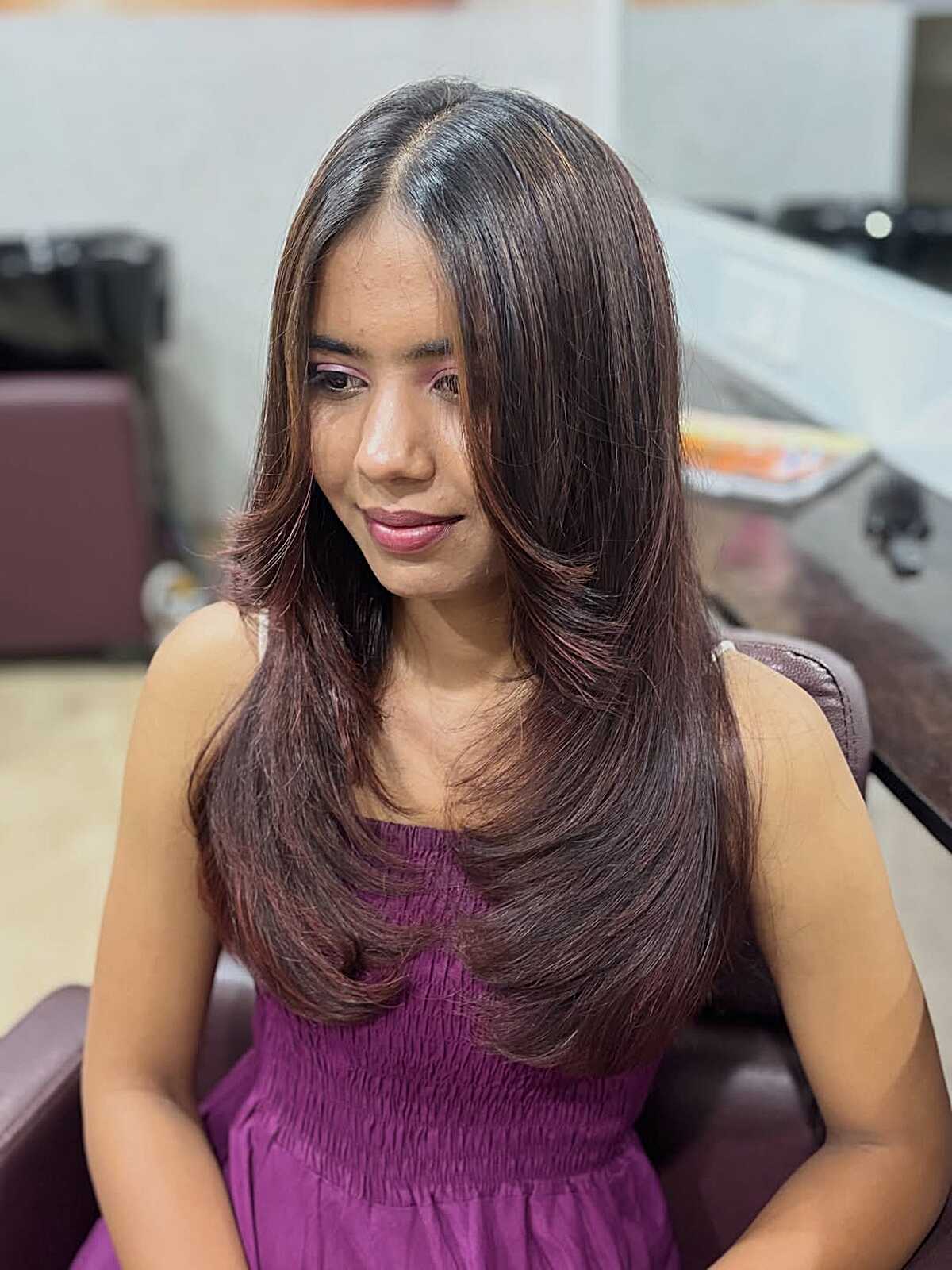
#22: Soft Feathered Ends on Straight Dark Hair
Notice how the layers mainly begin below the chin. That is deliberate, as it’s doing quite a bit on hair this fine since starting them higher would have thinned the crown and made the top look flat. The longest pieces reach mid-chest and have point cut ends that kick out just enough to give the illusion of fullness. This is a nice cut for fine, straight, medium density hair that lies flat against the body. It will not add volume starting at the crown. If that’s what you want, this cut alone will not do it. The face framing pieces that are cheekbone length and below are also nice for longer and oval shapes. One more thing, the ends are so thin they will look that way quickly if you go more than eight weeks between trims.
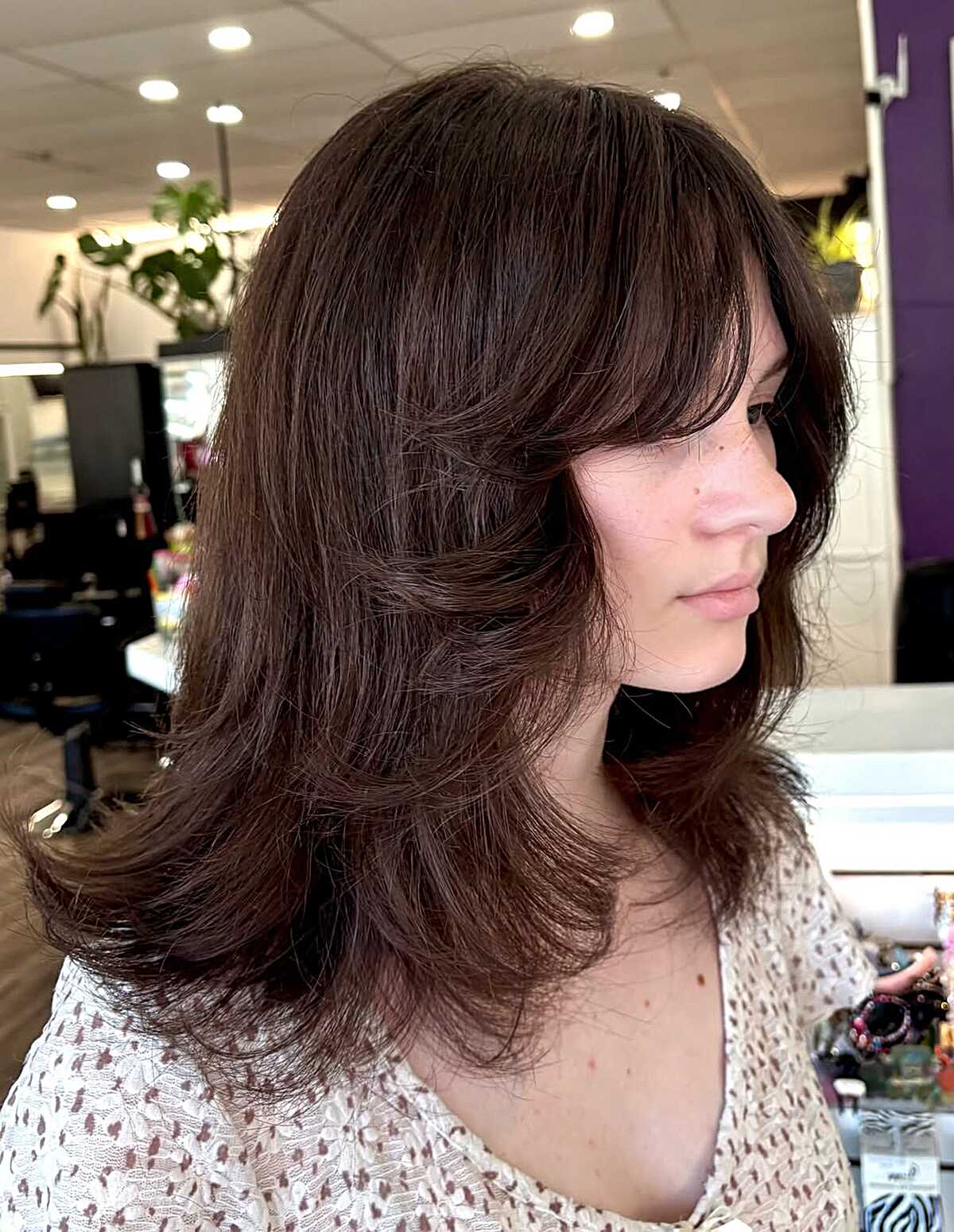
#23: Chocolate Brunette With Stacked Movement Through the Crown
The shortest layers are the ones doing the most heavy lifting here, and those are right at the cheekbone. Without those layers, this cut would just hang straight down. That cut also had some type of texturizing technique done to the interior to create the piece-y separation seen at the ends, which gives fine hair the illusion of more density without adding any bulk. It’s also a great example of a lift at the crown. That’s not just some volume. That’s done on purpose. This will also look great on oval and heart-shaped faces. If you have a round face, those cheekbone layers will make your face look wider. This cut will not last long. It’ll go flat by day two, and after that first day, no amount of dry shampoo will fix the crown collapse on fine, unwashed hair.
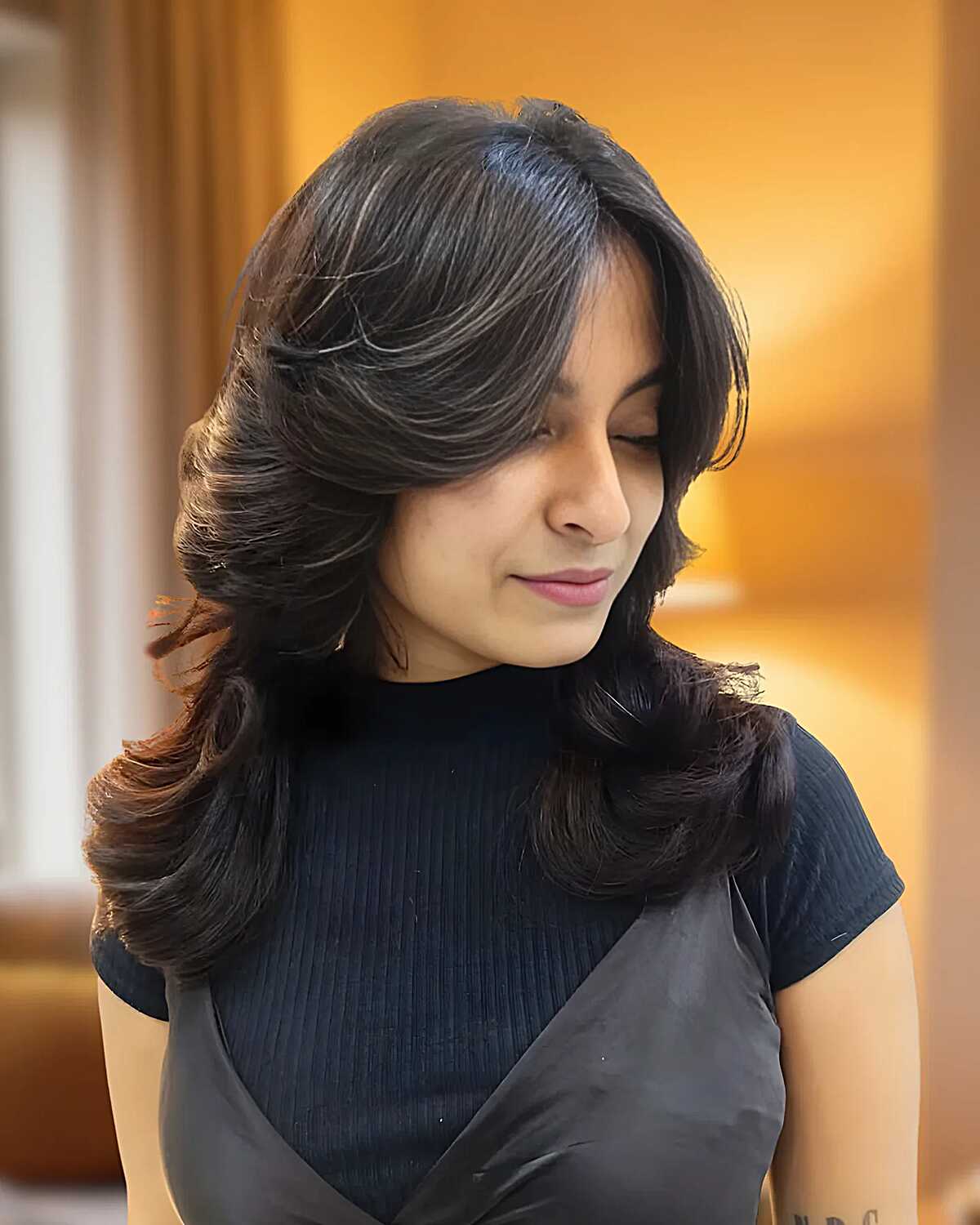
#24: Bouncy Curtain Layers That Live on Volume
The flipped ends show that some intentional work, and not just a wash and go cut, was done to this style. The layers here are point cut starting around the cheekbone and graduating to collarbone length which creates that swooping curtain frame that opens up an oval face without elongating it. What stood out to me the most is how much the shortest layer near her face lifts away from the head, which indicates that this hair has been blown out with some serious tension to create volume that fine hair doesn’t spontaneously have. On day two, this will flatten. That’s not a maybe. The dark, uncolored base keeps everything looking dense, and the uniform tone works with fine strands to get them looking good. Dimension from highlights can expose how thin individual pieces. This is a great cut for medium to fine density hair that commits to styling. It’s genuinely flattering for heart and oval face shapes where that width at the jaw balances things out. If you have short mornings, skip it.
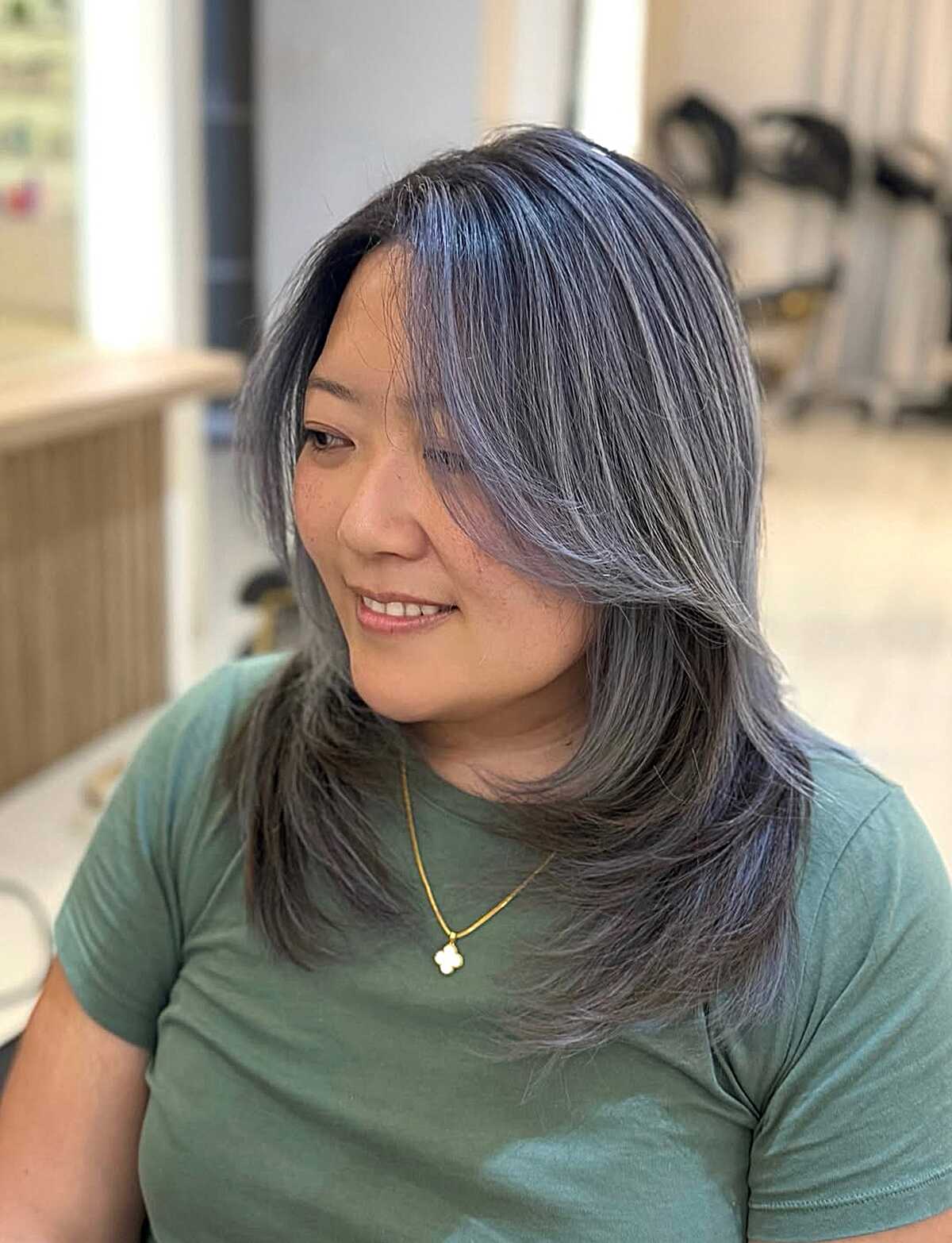
#25: Steel Blue Layers That Float Away From the Face
The steel blue color helps us to see the layers that a solid color would hide. You can see the face-framing pieces separate at the cheeks and kick outwards, creating width and airiness from fine hair. The layers are slide cut to keep the ends wispy, which tends to suit rounder face shapes because it draws the eyes outwards. If you don’t use purple shampoo, the color will go muddy fast. On thicker hair, this cut would look like any other regular layered cut and you would lose the floaty quality that makes it worth it to get a high maintenance color.
Enter your email and get this picture and description straight to your inbox, and you'll also get new hair ideas ❤️
🔒 We don't spam or sell emails. See our Privacy Policy.