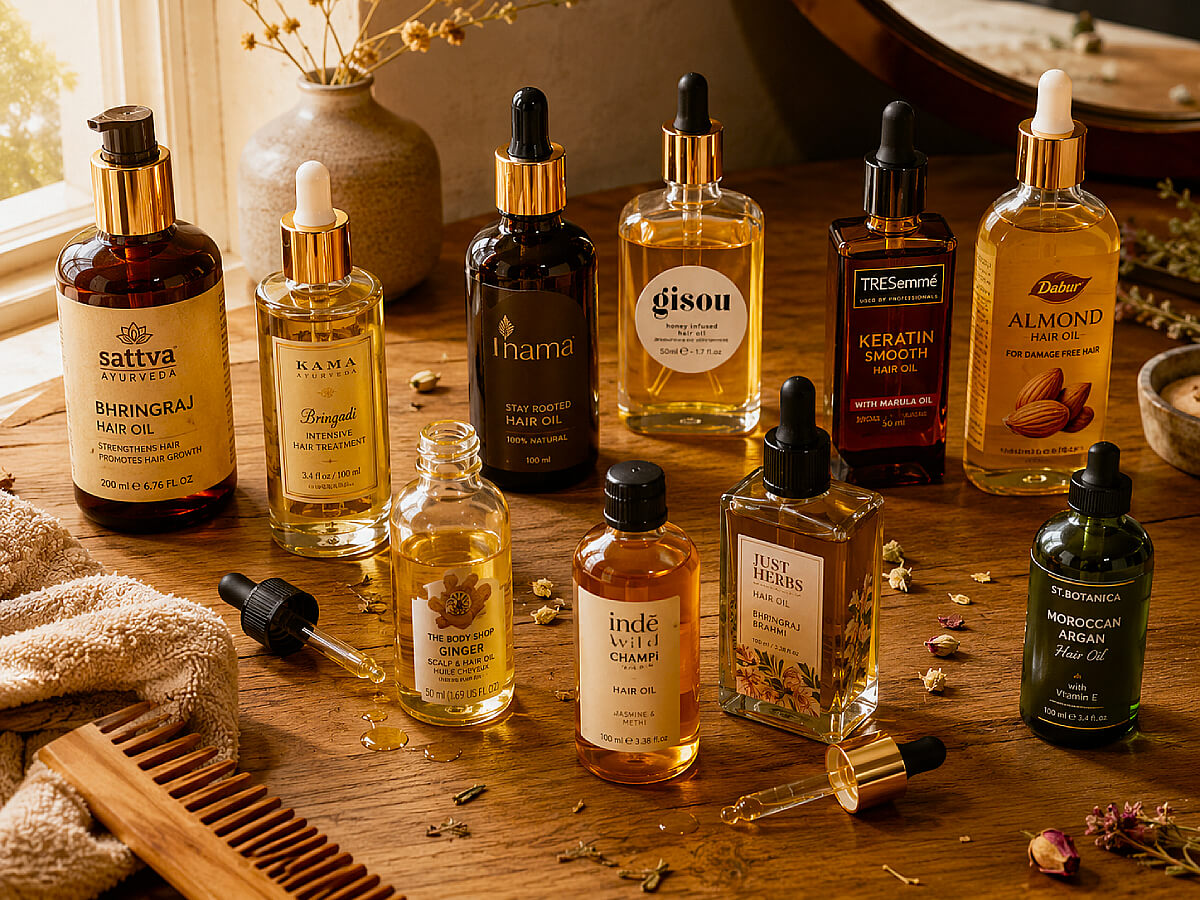

From Sandra Kelleher, Davenport, Iowa: “I’ve been seeing hair oils everywhere lately and I honestly don’t know where to start. My hair is fine but dry, and I’m in my mid-50s so it’s also lost some of that thickness it used to have. Every product claims to do everything. Can you help me figure out what’s actually worth buying and how to actually use the stuff without looking like I’ve been deep-frying?”
Sandra, I love this question so much, partly because I get a version of it in my chair at least twice a week. Hair oils are genuinely one of the most useful categories in the whole haircare world, but the marketing around them has gotten so noisy that it’s nearly impossible to know what you’re actually buying. I’ve been doing hair for over two decades and I’ve watched oils go from something we used almost exclusively on thick, coarse, or chemically treated hair to a product that everyone and their dermatologist is recommending for every hair type. And honestly? That’s not entirely wrong. But the details matter a lot, and nobody’s really explaining them.
The difference between an oil that transforms your hair and one that leaves you looking like you haven’t showered in three days comes down to which oil you’re using, how much you’re applying, and where it goes on your hair. Fine hair and coarse hair need completely different approaches. Older hair that’s been through years of coloring or heat styling has different needs than hair that’s never seen a flat iron. I’m going to walk you through ten of my favorites, including how I actually recommend using each one, and we’ll start at ten and work our way down to the one I genuinely cannot stop recommending.
This post may contain affiliate links, meaning I may earn a small commission at no extra cost to you. I only share products I truly believe in. As an Amazon Associate, I earn from qualifying purchases. Your support helps me continue creating free content like this.
10. Castor Oil
Castor oil has been having a moment for years now, and while I think some of the claims around it are a stretch, it does have its place. The reason I put it at number ten is mostly a usability issue. This stuff is thick. Like, very thick, almost syrupy, and if you don’t cut it with something else or apply it extremely carefully, you will absolutely look like you’ve been greasing a pan. I’ve seen so many clients come in convinced castor oil was going to give them the brows of a 25-year-old, and while it’s not magic, it’s not nothing either.
What castor oil is actually good at is acting as an occlusive sealant, meaning it doesn’t penetrate the hair shaft so much as it coats it, trapping in moisture that’s already there. So if you’re going to use it on your hair rather than your scalp or edges, you want to apply it on top of something else, like after a leave-in conditioner or a lighter oil, so there’s actually some moisture underneath it to seal in. I use a tiny, tiny amount, like less than a pea-sized, warmed between my palms, and I smooth it over the very ends of dry hair. It’s also nice for taming those wiry little gray hairs that stick up at the part.
If you want to try it, look for a cold-pressed, hexane-free castor oil, and maybe get a smaller bottle first so you can figure out if you like it before committing to a giant jug. Jamaican Black Castor Oil, which is roasted rather than cold-pressed, has a slightly different texture and some people prefer it. Just go in with realistic expectations and a very light hand.
9. Sweet Almond Oil
Sweet almond oil is the one I’d call a reliable workhorse, not glamorous, not trendy, but it quietly does its job without making a big fuss about it. It’s lighter than castor oil but still has enough weight to smooth frizz and add a little slip to the hair, which makes detangling significantly easier, especially if your hair is fine and prone to breakage from rough handling. I actually keep a bottle of it in my kit for that reason, mostly to add a few drops to conditioner when I’m doing a treatment on a client with thinner, more fragile hair.
The thing I like about sweet almond oil is that it absorbs reasonably well without leaving much residue, so it’s one of the more forgiving options if you’re still figuring out your hand with oils. You can apply a couple of drops to damp hair before you dry it and most people won’t go wrong. It’s also rich in vitamin E and oleic acid, which are both genuinely good for the hair’s outer layer, so there’s real chemistry backing it up, not just marketing language.
Sweet almond oil is widely available and inexpensive, which is another reason I like it. You don’t have to buy a fancy branded version. A good, pure cold-pressed sweet almond oil from a natural foods brand is perfectly fine. Apply a small amount, maybe three to five drops warmed in your hands, smoothed over damp hair from mid-shaft to ends. For fine hair like Sandra’s, I’d start with two drops and work up from there. It’s not going to rebuild damaged hair on its own, but as part of a regular routine, it makes a real difference over time.
8. Grapeseed Oil
If you have fine hair and you’ve been avoiding oils because everything you’ve tried just weighs it down, grapeseed oil might be the one that changes your mind. It’s one of the lightest oils available, absorbs quickly, and has almost no scent, which matters more than people admit when they’re choosing hair products. I’ve recommended it specifically to fine-haired clients who wanted the benefits of an oil treatment without that heavy, greasy aftermath, and it consistently gets good feedback.
Grapeseed oil works particularly well as a pre-shampoo treatment, which is something a lot of people haven’t tried and genuinely should. You apply it to dry hair before you wash, let it sit for twenty to thirty minutes, then shampoo as usual. It helps protect the hair shaft from the drying effects of cleansing, especially if you’re using a shampoo with sulfates, and it can make your ends feel noticeably softer over time without any residue post-wash. I started recommending this approach about six or seven years ago after I had a client with fine color-treated hair who was washing daily, and it made a visible difference in her hair’s condition within about three weeks.
Grapeseed oil is very affordable and you can use the same bottle for cooking, skincare, and hair, which I find oddly satisfying. Look for cold-pressed and pure with no additives. For the pre-shampoo treatment, warm it slightly, work it through dry hair focusing on the ends, put a shower cap over it if you want, and then wash. That’s really all there is to it.
7. Avocado Oil
Avocado oil is one that I think is genuinely underrated in the hair oil conversation because everyone associates avocados with the food world and kind of forgets that the oil is remarkably good for dry, mature hair. It’s rich in oleic acid and penetrates the hair shaft better than a lot of heavier oils do, which means it’s actually conditioning the hair itself rather than just coating the outside. For hair that’s lost moisture and elasticity over time, which happens to most of us as we get older and especially as estrogen levels shift, avocado oil is worth considering.
I started paying more attention to avocado oil a few years back when I was going through a dry spell with my own hair. Hormonal changes, some stress, a winter that absolutely destroyed everyone’s moisture levels in my area, and I found that my go-to products weren’t doing enough. I added a weekly deep treatment using avocado oil mixed with a little honey and a conditioner I liked, and I left it on for about forty-five minutes under a heat cap. The difference was real. My hair felt more pliable, less brittle at the ends, and it held moisture between washes better than it had in a while.
Avocado oil is on the heavier side so I don’t usually recommend it as a daily styler for fine hair. But as a weekly or biweekly treatment, or mixed into a deep conditioner, it’s excellent. For thicker or coarser hair types, it works beautifully as an everyday finishing oil on the ends.
6. Rosehip Oil
Rosehip oil is something I mostly talk about in the context of scalp health, which is a part of the hair oil conversation that doesn’t get nearly enough attention. People focus so much on the lengths and ends that they neglect the fact that a healthy scalp is the actual foundation of healthy hair. Rosehip oil has linoleic acid and vitamin A precursors that can support scalp skin health, reduce inflammation, and help with that tight, dry, slightly itchy scalp feeling that a lot of women in their 40s and 50s start to notice.
It’s also one of the drier oils, meaning it absorbs without much residue, which makes it better suited for scalp application than a lot of the heavier options on this list. I’ll often recommend doing a scalp massage with rosehip oil the night before a wash day, really working it into the scalp with your fingertips, leaving it overnight, and then shampooing in the morning. The scalp massage itself is beneficial regardless of the oil you use, but rosehip oil adds something extra for scalp conditions that involve dryness or sensitivity.
One thing I should say because the marketing gets wild around this one: rosehip oil is not going to reverse hair thinning or regrow hair. If you’re seeing significant hair loss, please talk to your doctor, because that’s a medical conversation, not a product conversation. But for general scalp dryness and the health of your existing hair, rosehip oil is a genuinely smart addition to a scalp care routine. Store it in the fridge if you buy it in a larger bottle, because the fatty acids can go rancid faster than some other oils.
5. Jojoba Oil
Technically jojoba isn’t even an oil, it’s a liquid wax ester, which sounds like a chemistry lecture but actually matters because it means it mimics the structure of the scalp’s natural sebum more closely than any other oil does. That’s why jojoba is so well tolerated by almost every hair type and doesn’t tend to cause buildup the way heavier oils do. I’ve recommended it to clients with oily scalps who were hesitant to use any oil at all, and it’s one of the few that can actually help regulate sebum production over time with consistent scalp use.
For fine hair, jojoba is excellent because of that light, non-greasy finish. A few drops on the ends of dry hair is enough to add a little smoothness and shine without any heaviness. For someone like Sandra, who mentioned fine but dry hair, I’d suggest jojoba as one of the first oils to try because the risk of over-applying and ruining the volume you do have is much lower than with some of the richer options.
I keep a small jojoba oil in my kit bag specifically for finishing. When a blowout is almost done and I want to smooth any little frizzy bits at the surface without disturbing the volume underneath, jojoba is what I reach for. It doesn’t move the hair around or add weight, it just settles things down. Desert Essence makes a good one, and The Ordinary has an affordable multi-use version that works well on both hair and skin.
4. Coconut Oil
I know some of you are going to wonder why coconut oil isn’t higher on this list given how popular it is, and I want to explain that before we get into why it’s still in the top five. Coconut oil is genuinely effective at reducing protein loss in hair, it has real science behind it that most oils don’t have, and for the right hair type it’s absolutely excellent. The reason it lands here at four rather than higher is that it’s not a great fit for everyone, and I think the universal recommendation it gets does some people a disservice.
If your hair is protein-sensitive, coconut oil can actually make it feel stiffer and more brittle over time rather than better. This happens because coconut oil penetrates the hair shaft and binds to the keratin protein inside it, which is great if your hair is protein-deficient, but can push protein-sensitive hair over the edge. I’ve seen this happen with clients and watched them get frustrated when their hair got worse instead of better, and it takes a while to explain what happened. If you try coconut oil and your hair feels dry, stiff, and almost gummy after using it consistently, that’s likely protein sensitivity.
For everyone else, though, coconut oil as a pre-shampoo treatment is hard to beat. Warm it until liquid, apply generously to dry hair, leave for at least thirty minutes, and then wash. Refined coconut oil works fine for hair but I usually reach for unrefined, virgin coconut oil because it holds more of the naturally occurring compounds. Nutiva and Viva Naturals are both solid brands that won’t cost you a fortune.
3. Marula Oil
Marula oil feels luxurious in a way that a lot of the other oils on this list don’t, and I mean that in a very practical sense, not just a spa-brochure sense. It spreads easily, absorbs quickly, has a very subtle scent, and leaves hair with a softness that feels genuinely different from what most other oils deliver. It’s high in oleic acid and has good antioxidant content, and it works well on both the hair and the scalp, which gives it more versatility than some of the more specialized oils.
The brand that really put marula oil on the map for hair specifically was Drunk Elephant with their B-Hydra and hair-focused products, and Lala Retro, but the ingredient itself is what matters here. You can buy pure marula oil and use it directly, which is considerably more cost effective than buying a branded product with a long ingredient list where marula is fifth on the label. I’ve been recommending pure marula oil to clients with dry, color-treated hair for a few years now and the feedback is consistently positive.
Pure marula oil is available from several brands, including Acure and Leven Rose, both of which I’ve used and been happy with. A small bottle goes a long way because you really only need three or four drops, smoothed over damp or dry hair from mid-shaft down. It’s also one I like layering under a heavier finishing product on particularly dry days or after a color service, because it adds moisture without interfering with whatever you’re putting on top.
2. Squalane Oil
Squalane is derived most commonly from sugarcane now, which is worth knowing since the older versions were derived from shark liver oil and that’s not something most of us want to be thinking about when we’re doing our hair. The plant-derived squalane is chemically identical in function and has become one of my absolute most-recommended hair oils in the last several years because of how universally well it works across hair types, including fine hair.
What makes squalane genuinely special is how it behaves on the hair. It distributes evenly, absorbs without residue, adds incredible slip for detangling, and leaves a softness that I find hard to describe except to say the hair feels like itself but better, not coated, not heavy, just softer. I use it on my own hair, I’ve recommended it to clients with fine, thick, curly, straight, color-treated, gray, and chemically relaxed hair, and I have genuinely never had someone report back that it made things worse.
The Ordinary Squalane is the product I recommend most often in this category because it’s inexpensive, pure, and widely available. The Ordinary 100% Plant-Derived Squalane is about twelve dollars for a small bottle that lasts for months because you use so little of it at a time. Biossance also makes a squalane oil that’s well-formulated if you want a slightly more premium option. For application, two to three drops on damp hair before styling, or one to two drops on dry hair to smooth and add a little shine without disturbing the style. It’s the first oil I tell anyone to start with when they don’t know where to begin.
1. Argan Oil
If I could only keep one oil, it would be argan oil, and I say that after genuinely thinking about it and not just because it’s the most famous one. Argan oil has been in my kit longer than almost any other product, it has earned its reputation in a way that not many beauty ingredients actually have, and it works across the full range of what we ask hair oils to do. It smooths frizz without weight, protects against heat damage, adds shine that looks natural rather than artificial, and it improves the overall feel of hair with consistent use in a way you can actually track over weeks.
The reason argan oil works so well is partly its fatty acid profile, high in oleic and linoleic acids, and partly its vitamin E content, but I think the more honest answer is that it just has the right weight and texture for hair. It’s not so light that it doesn’t do anything, and not so heavy that it creates problems for people with finer hair. It’s the oil that occupies the most useful middle ground, which is why it became such a staple in professional haircare, and specifically why Moroccan Oil became such a phenomenon when it launched. That brand did something smart by using argan oil as the hero ingredient in a product formulated specifically for hair, and even though there are now many alternatives, Moroccan Oil Original Treatment is still genuinely good and I keep a bottle at my station.
That said, you don’t have to buy a premium branded product to get the benefits of argan oil. Pure argan oil from brands like OGX, Pura d’Or, or Art Naturals gives you the same core ingredient at a significantly lower price point. The key is looking for 100% pure argan oil or a product where argan is the first or second ingredient, not buried at the bottom of a long list. For application, I like three to four drops warmed in the palms, smoothed over damp hair before heat styling. It offers real thermal protection up to a point and leaves the kind of finish after a blowout that makes people ask what you did differently. For dry hair, fine hair, color-treated hair, or hair that’s been through the hormonal changes that come with perimenopause and menopause, argan oil is consistently the most reliable, versatile, hardest-working option in the whole category. It’s number one for a reason.
A Few Final Thoughts Before You Go Buy All Ten
Sandra, I want to leave you with something practical because lists can sometimes make everything feel equally urgent. Start with one or two oils, not ten. If I had to pick two for fine, dry hair in your situation, I’d say squalane for daily use and argan oil for styling and finishing, and see how your hair responds over four to six weeks before adding anything else. Most of us don’t need a full shelf of oils, we need the right one used correctly, and that takes a little time to figure out.
The other thing worth saying is that hair oils work best as part of a routine that also includes a good moisturizing shampoo, a conditioner you’re actually leaving on for a few minutes, and some protection from heat if you’re using styling tools. Oils amplify a good routine, but they can’t rescue a neglected one. I’ve seen clients spend a lot of money on premium hair oils and still have struggling hair because the basics weren’t in place, and that’s always a little heartbreaking because the fix is usually simpler than they think.
Your hair in your 50s is different from your hair in your 30s, and that’s not a problem to be fixed, it’s just a situation to be understood. Oils are one genuinely useful tool in that understanding. Use them thoughtfully, use less than you think you need, and give things time to work. That’s really most of what I know about this.