
From Sandra Kowalczyk, Mineral Wells, Texas: “I’ve been noticing my hair feels thinner lately, especially at the crown, and my scalp feels kind of tight and flaky even though I wash it regularly. A friend mentioned that scalp care might actually help with thickness, but I don’t even know where to start. Can you help?”
Sandra, you are not alone in this, and honestly your friend gave you some of the best advice you could get. The scalp is one of those things the beauty industry sort of ignored for decades while we were all obsessing over the ends of our hair, which is a little backwards when you think about it. Every single strand you have grows from your scalp, so if the environment up there is off, the hair that comes out of it is going to reflect that. I’ve had clients sitting in my chair for years before anyone ever once talked to them about their scalp health, and when we finally addressed it, the change in their hair was honestly more dramatic than any cut or color I could have done.
Hair has been my work for years, and I’d say the single most consistent thing I see with women who are experiencing thinning, especially in their 50s and 60s, is a scalp that’s either too dry, too congested, or both at the same time. Which sounds contradictory, but it’s not. Buildup from products and hard water can sit right on top of a scalp that’s also flaking and irritated underneath. So let’s go through what actually makes a difference, in order of how much I think each thing matters.
This post may contain affiliate links, meaning I may earn a small commission at no extra cost to you. I only share products I truly believe in. As an Amazon Associate, I earn from qualifying purchases. Your support helps me continue creating free content like this.
8. Stop Skipping the Scalp When You Condition
This one feels small but it’s something I’ve had to correct with nearly every client I’ve ever had. The habit is deeply ingrained: shampoo the roots, condition the ends. We’ve all heard it so many times it sounds like a law. But here’s the thing, that rule was written for people with long, color-treated hair who were trying to avoid weighing down fine strands, and it got passed around until it turned into universal gospel.
For women dealing with a tight, dry, or flaky scalp, avoiding the roots during conditioning can actually make the problem worse over time. The scalp needs moisture too, especially as we get older and sebum production naturally slows down. I’m not saying slather a thick mask all over your roots every wash day, but a lightweight conditioner worked gently into the scalp a few times a week can do a lot to calm irritation and reduce that tight, uncomfortable feeling Sandra described.
What I’d actually recommend is something like a scalp-specific conditioner that’s formulated to hydrate without building up. The Briogeo Scalp Revival line has a good one, and I’ve also been impressed with the Olaplex No. 4 Bond Maintenance Shampoo paired with a light rinse-out treatment at the root area. Give it two or three washes before you judge it. The scalp needs a little time to recalibrate once you stop stripping it dry every time.
7. Hard Water Is Quietly Wrecking Your Hair Growth Environment
If you live somewhere with hard water, and a lot of Texas absolutely qualifies, this might be doing more damage than anything else on this list. I didn’t fully believe it myself until I moved into a house with terrible water a few years ago and watched my own hair get dull, brittle, and strangely thin at the crown within about three months. I thought I was imagining it. I was not.
Mineral deposits from hard water, particularly calcium and magnesium, build up on the scalp over time and create a layer of residue that clogs follicles and makes it genuinely harder for new hair to push through. It also makes the hair shaft rough, which causes breakage closer to the root than most people realize, so you think you’re losing hair when you’re actually just snapping it off before it gets any length.
A shower filter is one of the most underrated investments in hair health I’ve ever recommended, and I’ve started mentioning it to almost every client who’s struggling with unexplained thinning. The Jolie Filtered Showerhead gets a lot of attention online and it’s genuinely good. If that’s not in the budget right now, a chelating or clarifying shampoo used once a month can help remove some of that mineral buildup. OUAI Detox Shampoo is one I keep coming back to. It’s not dramatic, but over time the difference in scalp clarity is real.
6. Your Scalp Needs Exfoliation, and Probably More Than You Think
The concept of exfoliating your scalp has been trending for a while now, and for once I think the trend is actually onto something. Dead skin cell buildup, product residue, and excess oil can all accumulate around the follicle opening and essentially create a hostile environment for healthy hair growth. It doesn’t take a huge amount of blockage to slow things down.
I started recommending scalp scrubs to clients about five or six years ago and the feedback has been pretty consistent: people notice their hair feeling more like it did years ago, like it has a little more body and resilience at the root. I think what’s actually happening is that the follicle environment improves and the new growth that comes in is just healthier from the start.
A physical scrub used once a week is usually plenty. The Briogeo Scalp Revival Charcoal + Coconut Oil Micro-Exfoliating Shampoo is genuinely one of the best I’ve tried, and I’ve tried a lot. It has a satisfying grit to it without being abrasive, and the charcoal helps draw out buildup without drying out the scalp. If you want something a little more targeted for flaking or seborrheic dermatitis, a chemical exfoliant with salicylic acid applied before shampooing can work beautifully. Neutrogena T/Sal Shampoo is boring-looking and old school but I still reach for it when clients need something that actually works on stubborn flaking. Go slow with exfoliation if your scalp is sensitive. Once a week to start, and see how it feels.
5. Scalp Massage Is Free and People Still Don’t Do It
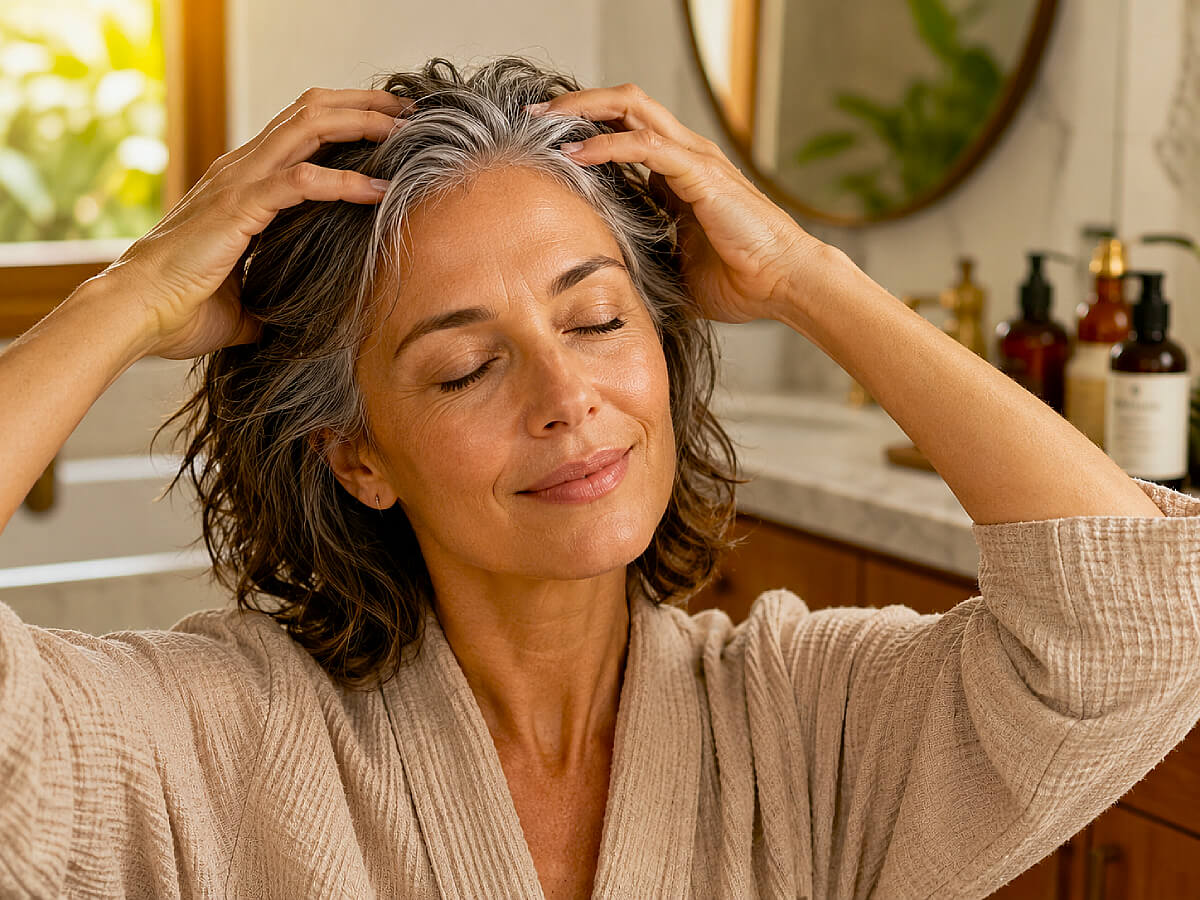
Out of everything on this list, this is the one that costs nothing, takes about four minutes, and gets skipped almost universally. I understand why, it feels indulgent, it feels like it can’t really be doing that much, and honestly working it into a shower routine requires remembering to do one more thing. But the research on this is actually pretty solid, and the anecdotal evidence from my own clients is even more convincing.
Scalp massage increases blood circulation to the hair follicles, which means more oxygen and nutrients getting delivered to the root. One small study that got a lot of attention a few years back showed measurable increases in hair thickness after participants did daily scalp massage for 24 weeks. That’s not a miracle number, but it’s real. And beyond the follicle stimulation, massage helps loosen any buildup around the root before you shampoo, which makes your cleansing more effective.
The technique matters a little. You want to use the pads of your fingers, not your nails, and apply medium pressure while moving in small circular motions across the whole scalp, not just the crown. Work from the nape up toward the temples, spend a little extra time wherever feels tight or tender. Four to five minutes during your shampoo, a few times a week, is genuinely enough to make a difference over a few months. If you want to add a little more to it, a silicone scalp massager brush amplifies the effect and also just feels really good. I keep one in my own shower and I’m not giving it up.
4. What You’re Eating Is Showing Up on Your Scalp
I say this gently because I know it’s not what people want to hear, but the connection between nutrition and hair density is one of the most direct relationships in the whole conversation about thinning hair, and it gets talked around a lot. Women especially, particularly post-menopause, tend to be low in iron, zinc, and protein, and all three of those are directly tied to the hair growth cycle.
When I was going through a period of really intense stress a couple of years ago, I stopped eating regularly, I wasn’t sleeping well, and within about four months I noticed a lot more hair in my brush than usual. My scalp started to feel different too, kind of dull and flat, less circulation somehow. I knew intellectually what was happening but it was still jarring to experience it from the inside. Getting my nutrition back on track made a bigger difference than any product I tried during that time.
A few things worth actually looking at: protein intake, because hair is made of keratin and you need enough dietary protein to produce it, ferritin levels, which is the stored form of iron and often low in women even when standard iron tests look fine, and vitamin D, which has a surprisingly strong link to hair follicle cycling. A lot of women do well with a targeted hair supplement that combines biotin, collagen, and zinc, though I’d suggest getting basic bloodwork done first so you’re not guessing. Nutrafol is the one I recommend most in the salon because I’ve seen real results from clients who stuck with it consistently. It’s not cheap, but it’s worth it.
3. The Right Scalp Serum Can Actually Change Things
Scalp serums have been having a real moment, and for once I don’t think it’s just marketing. The category has matured a lot in the last few years and there are some genuinely effective formulas out there now, particularly ones built around peptides, caffeine, and niacinamide, which all have legitimate research behind them for stimulating follicle activity and improving scalp circulation.
I started experimenting with scalp serums on myself maybe three years ago, partly out of curiosity and partly because a few of my clients were asking and I felt like I should have a real opinion. The one that converted me was the The Ordinary Multi-Peptide Serum for Hair Density. It’s not glamorous. The packaging is minimal, the price is low enough that it feels suspicious, but it works in a slow, cumulative way that I find more trustworthy than anything that promises fast dramatic results. I’ve been using it about four times a week at the crown and temples for almost two years now. I notice a difference when I stop.
For clients who want something more premium, Vegamour GRO Serum is worth the investment, especially if you’re post-menopausal and dealing with hormone-related thinning. Serums need to be applied to a clean, dry or slightly damp scalp, parted in sections so you’re actually getting it to the skin rather than just coating your hair. It takes a little patience but the application method matters more than most people realize.
2. Chronic Scalp Tension Is a Real Thing and It Silently Damages Follicles
This is one I talk about in the salon all the time and I still feel like I’m saying something slightly radical every time I bring it up. Most of us hold a tremendous amount of physical tension in the scalp, the same way we hold it in the jaw or the shoulders, and over time that tension literally reduces blood flow to the follicle area and can contribute to a condition called traction folliculitis, even in women who don’t wear tight hairstyles.
A tight scalp can come from stress, from habitual facial tension, from sleeping on the same side every night, or just from years of wearing hair pulled back. Sandra mentioned her scalp feeling tight, and that’s exactly the feeling I’m talking about. It’s not just discomfort, it’s a sign that the tissue isn’t getting the circulation it needs. I’ve had clients whose hair started growing noticeably better after they addressed chronic neck and shoulder tension through regular massage or even just changing how they sleep.
Beyond the massage we already talked about, a few other things help here: being mindful of how often you wear tight ponytails, sleeping on a silk or satin pillowcase which reduces friction and the unconscious tugging that happens during sleep, and being honest with yourself about stress levels. I know that last one is easier said than done. But the scalp does not lie about what’s going on in the rest of your body, and once you understand that, you start looking at it differently.
1. Addressing DHT Sensitivity at the Scalp Level Is the Most Important Thing Nobody Tells You About
So here’s where I want to spend real time, because this is the piece of the puzzle that I think makes the biggest difference and gets the least attention in the mainstream conversation about women’s hair thinning.
As women age, and particularly after menopause, the ratio of androgens to estrogen shifts. The scalp becomes more sensitive to a hormone called dihydrotestosterone, or DHT, which essentially miniaturizes the hair follicle over time. The follicle doesn’t disappear, it just produces thinner, finer, shorter hair with each cycle until eventually it may stop producing visible hair at all. This is androgenetic alopecia, and it affects far more women than most people realize, because when women lose hair this way it tends to diffuse across the whole scalp rather than creating a defined bald patch, so it can go unaddressed for a long time.
The good news is that addressing DHT sensitivity at the scalp level is very much possible, and there are some genuinely effective tools available now that don’t require a prescription. Saw palmetto is a botanical DHT blocker that’s well-researched and included in several good scalp serums and supplements. Nutrafol for Women includes it prominently and it’s one of the reasons I recommend it over basic biotin supplements, which I honestly think are overhyped for most women at this stage of life.
Minoxidil, which is the active ingredient in Rogaine, is also worth a serious conversation with a dermatologist. The women’s formula at 2% is available over the counter and has decades of clinical evidence behind it for female pattern hair thinning. I’ve had clients who were reluctant to try it because they associated it with male baldness and felt like it wasn’t meant for them, but it very much is. Women’s Rogaine Foam is the version I most commonly point clients toward because the foam formula is easier to apply without creating that greasy residue at the scalp. Results take about three to four months to become visible and you do need to keep using it, but for women dealing with significant diffuse thinning it can genuinely change the picture.
There’s also the newer category of low-level laser therapy devices for home use, like the Theradome or the iRestore helmet, which use red light to stimulate follicle activity. They look ridiculous, I will fully acknowledge that. But the evidence base is building and several of my clients who’ve used them consistently have reported meaningful improvement in density. They’re an investment, both financially and in terms of the commitment to sitting there wearing a light helmet, but for women who want to explore every reasonable option, it’s worth knowing they exist.
Here’s what I want Sandra, and anyone reading this who’s in the same place, to actually take away from all of this. Scalp health is hair health. They’re not separate conversations. The products you put on the ends of your hair, the gloss treatments and the masks and the serums for shine, those things can make your hair look better but they can’t make more of it. That only happens at the root, in the scalp tissue, driven by circulation and follicle health and hormones and what you’re putting into your body. Starting to pay attention to that environment, even with just a few of these changes, is genuinely one of the most effective things you can do for your hair at any age, and honestly it’s something I wish someone had sat me down and explained a long time ago.
Take it one step at a time. Start with the massage, add in the exfoliation, take a serious look at your water situation if you’re in a hard water area, and consider getting some basic bloodwork done if you haven’t in a while. The scalp responds. It just needs a little more attention than most of us have been giving it.