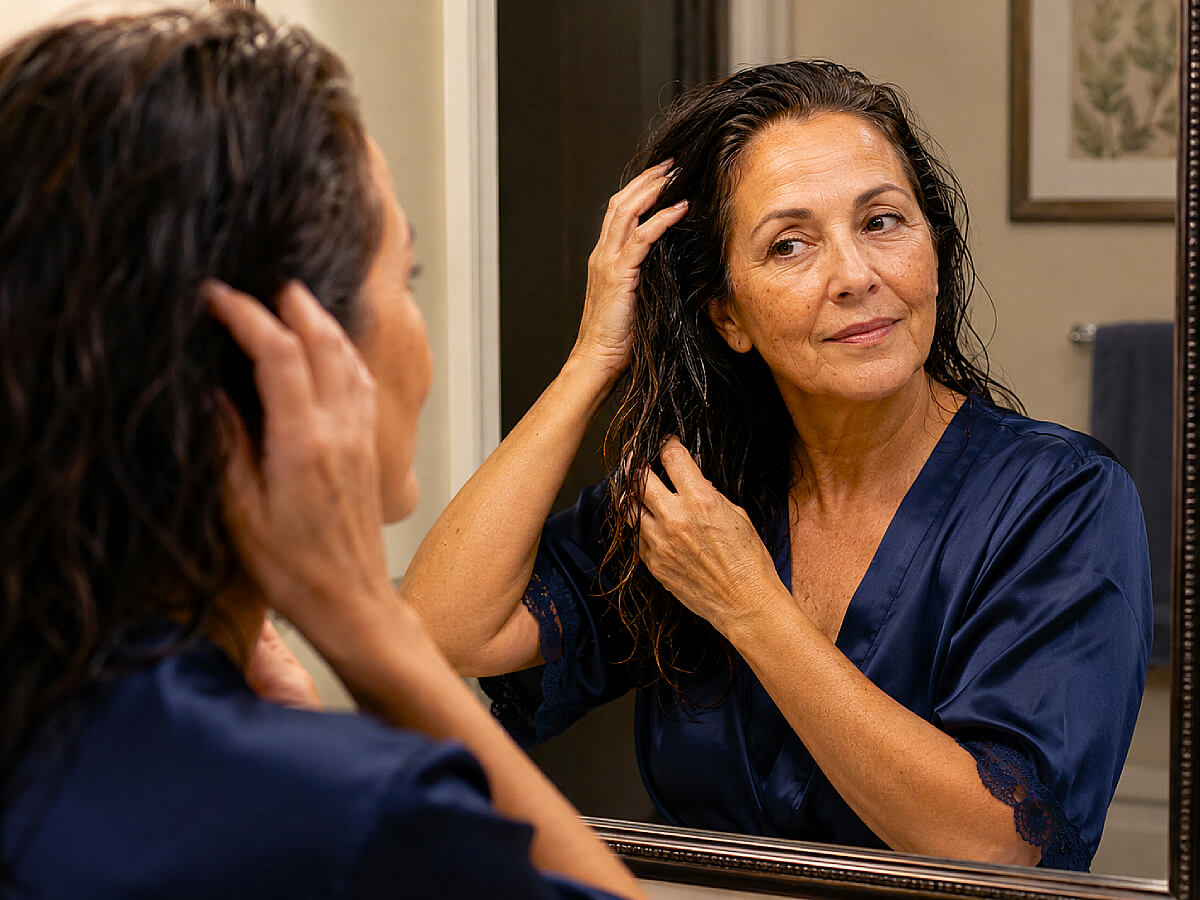

I’m 58 and my hair has become so dry and thin over the last few years that I barely recognize it anymore. The products I used to swear by now leave my hair limp or greasy by the end of the day, and volumizing shampoos just make it feel straw-like. I’m especially struggling with frizz around my crown and breakage near my temples. Is there a realistic routine or product combination that actually helps aging hair look fuller and healthier without spending a fortune?
— Carol B., Tampa, Florida
Carol, what you’re describing is honestly something I hear from clients all the time once they hit their fifties. Hair starts behaving differently almost overnight. It gets drier, finer in certain spots, and products that used to work suddenly make everything feel heavy or greasy. That doesn’t mean you’re stuck with flat, frizzy hair though. It usually just means your hair needs a different kind of support now.
One thing I always recommend is staying away from overly rich creams and heavy oils, especially if your hair is thinning around the crown. Those products can flatten the hair even more and make buildup happen faster. Instead, lightweight formulas with a bit of protein, gentle moisture, and volume support tend to work much better for mature hair because they help the hair feel fuller without coating it.
The dryness and frizz are also very common once texture changes start kicking in, especially if you color your hair or have more gray coming through. Gray hair naturally has a rougher texture, so it needs moisture, but not the kind that weighs it down. A good lightweight shampoo, a repair treatment, and a soft leave-in product can make a huge difference in how your hair looks and feels day to day.
The good news is there are products out there that really do help. Sometimes it just takes letting go of the heavier products your hair used to love and switching to formulas that work with the texture you have now instead of against it.
Quick note: This post may contain affiliate links, which means I may earn a small commission if you purchase through them. That never affects the products I recommend, and there’s no extra cost to you. As an Amazon Associate, I earn from qualifying purchases. It simply helps support the site and keeps this content free to read.
K18 Leave-In Molecular Repair Hair Mask

This treatment works well for repairing damage from coloring and heat styling, though the small bottle size at this price point might make you pause before committing.
Pros
- Noticeably strengthens hair that’s been through bleaching and chemical processing
- Works quickly in just four minutes without requiring a rinse
- Effective across different hair textures including curly and coily types
Cons
- The bottle is quite small for what you’re paying, which can feel disappointing when you first open it
- You’ll need to use it consistently for several washes before seeing the best results
- The price adds up quickly if you have long or very damaged hair that needs regular treatment
If you’ve been coloring your hair for years like most of us over 50, you know that dryness and breakage just come with the territory. This peptide treatment takes a different approach than your typical deep conditioner because it’s actually working inside the hair strand rather than just coating the outside. You apply it after shampooing but skip the conditioner, which feels a bit odd at first but makes sense once you understand how it penetrates.
The four-minute wait time is manageable, and since you don’t rinse it out, you’re not adding extra steps to your routine beyond those few minutes of patience. What’s interesting is how it helps with manageability and smoothness over time, especially if you’re someone who’s put your hair through multiple color treatments or regular heat styling. Most people notice a difference after two or three uses rather than immediately, so you need to stick with it through those first few washes.
The peptide formula is designed to reconnect broken bonds in your hair structure, which is particularly helpful when you’ve got damage from bleaching or chemical services. It works on fine hair, thick hair, straight or curly, because it’s targeting that inner structure rather than just addressing surface issues. One to three pumps is usually enough for shorter to medium length hair, though if yours is longer you might find yourself going through the bottle faster than you’d like given the cost.
Olaplex No. 3 and No. 4 Duo

This duo gives you both the treatment and shampoo you need to address damage that tends to show up more after 50, when hair gets drier and more fragile.
Pros
- Works on breakage while you’re actively using it, helping hair look less brittle over time
- The shampoo cleans without stripping, which matters when your scalp doesn’t produce as much oil anymore
- A little goes a long way with both products, so the bottles last longer than you’d think
Cons
- You need to use the No. 3 treatment before shampooing, which adds time to your routine
- The price point is higher than drugstore options, though the formula is concentrated
- Results build gradually, so you won’t see a complete transformation after one use
The Olaplex No. 3 and No. 4 combination tackles two things at once, the repair work that happens with the treatment and the gentler daily maintenance from the shampoo. Your hair changes as you get older, it doesn’t hold moisture the same way, color treatments or heat styling from years past leave their mark, and what worked in your thirties might leave your hair feeling stripped now. This set addresses that by working on the bonds inside the hair shaft rather than just coating the outside.
The No. 3 treatment goes on damp hair before you shampoo, you leave it for at least ten minutes though some people go longer, and it gets to work on repairing damage from the inside. Then you follow with the No. 4 shampoo, which is sulfate-free so it won’t dry things out further while it cleans. People mention needing only a small amount of the shampoo because it lathers well, which is good because you want this to last given what you’re paying for it.
What I appreciate about this pairing is that it doesn’t promise overnight miracles but delivers steady improvement, your hair starts to feel less straw-like, it holds styles better, and you see less breakage when you brush. The cream formula of both products feels substantial without being heavy. If your hair has been through chemical processing or if you’re noticing more dryness and texture changes, this is worth considering, though you do need to commit to the two-step routine to get the full benefit.
Moroccanoil Treatment Hair Oil
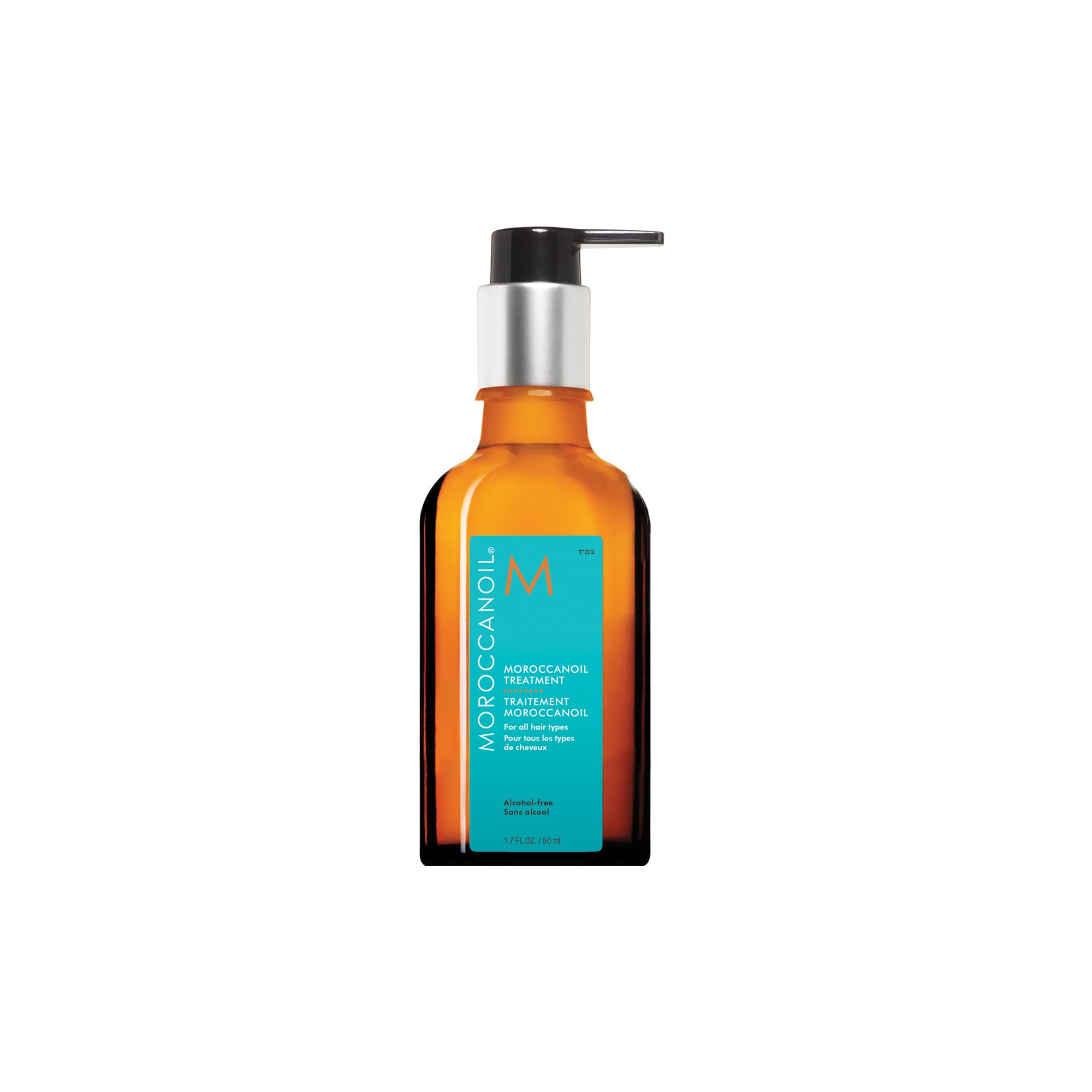
This oil genuinely delivers on softness and shine, though you’ll need to find your perfect amount to avoid any heaviness.
Pros
- Tackles frizz and adds noticeable shine without leaving hair greasy
- Works well for detangling and continues smoothing even the next day
- A little product goes far, so the bottle lasts longer than you’d expect
Cons
- The signature scent is strong, which might not suit everyone
- Can weigh hair down if you use too much at once
- Price point sits higher than many drugstore alternatives
The argan oil formula in this treatment really does soften hair in a way that feels consistent rather than dramatic, and if you’re dealing with dryness or texture changes that come with age, it addresses those concerns without feeling heavy. You apply it to damp hair after washing, focusing on mid-lengths to ends where most of us need the help, and it absorbs pretty well while leaving behind that glossy finish.
What stands out is how it manages frizz throughout the day without making your hair look or feel oily, which is harder to find than you’d think in hair oils. The formula is sulfate and paraben free, which matters if your hair has become more sensitive or porous over time.
The scent is something people either love or find too much, it’s got that distinct fragrance that lingers, so if you prefer unscented products this won’t be your favorite. You really do only need a small amount, maybe a pump or two depending on your hair length and thickness, because using too much can make finer hair look weighed down. It’s one of those products where less actually works better, and once you figure out your amount it becomes pretty reliable for keeping hair manageable between washes.
Buying Guide
When you’re looking at hair products now, the first thing I tell people is to read the ingredient list and not just the front label promises, because marketing will tell you anything but the back of the bottle tells you what’s actually in there. Look for products with hydrating ingredients like hyaluronic acid, ceramides, or natural oils if your hair has gotten drier, which happens to most of us.
Pay attention to whether a product is specifically formulated for aging hair or just general use. The specialized ones usually account for changes in texture and density that come with hormonal shifts.
Key Features to Consider
| Feature | What to Look For |
|---|---|
| Moisturizing agents | Oils, butters, glycerin for dryness |
| Volume boosters | Lightweight proteins, polymers if hair has thinned |
| Scalp care | Ingredients that support scalp health without weighing hair down |
| Color safety | Sulfate-free if you color your hair |
| Weight | Lighter formulas for fine hair, richer for coarse or very dry hair |
Think about your specific concerns rather than buying something just because it says anti-aging on it. If your main issue is frizz, you need different ingredients than someone dealing with thinning or loss of shine.
I always suggest starting with one product at a time so you actually know what’s working, and don’t assume expensive means better because I’ve seen plenty of pricey products that don’t deliver what a simpler formula does. Your hair might need less than you think, or it might need something very specific that you’ve been overlooking.