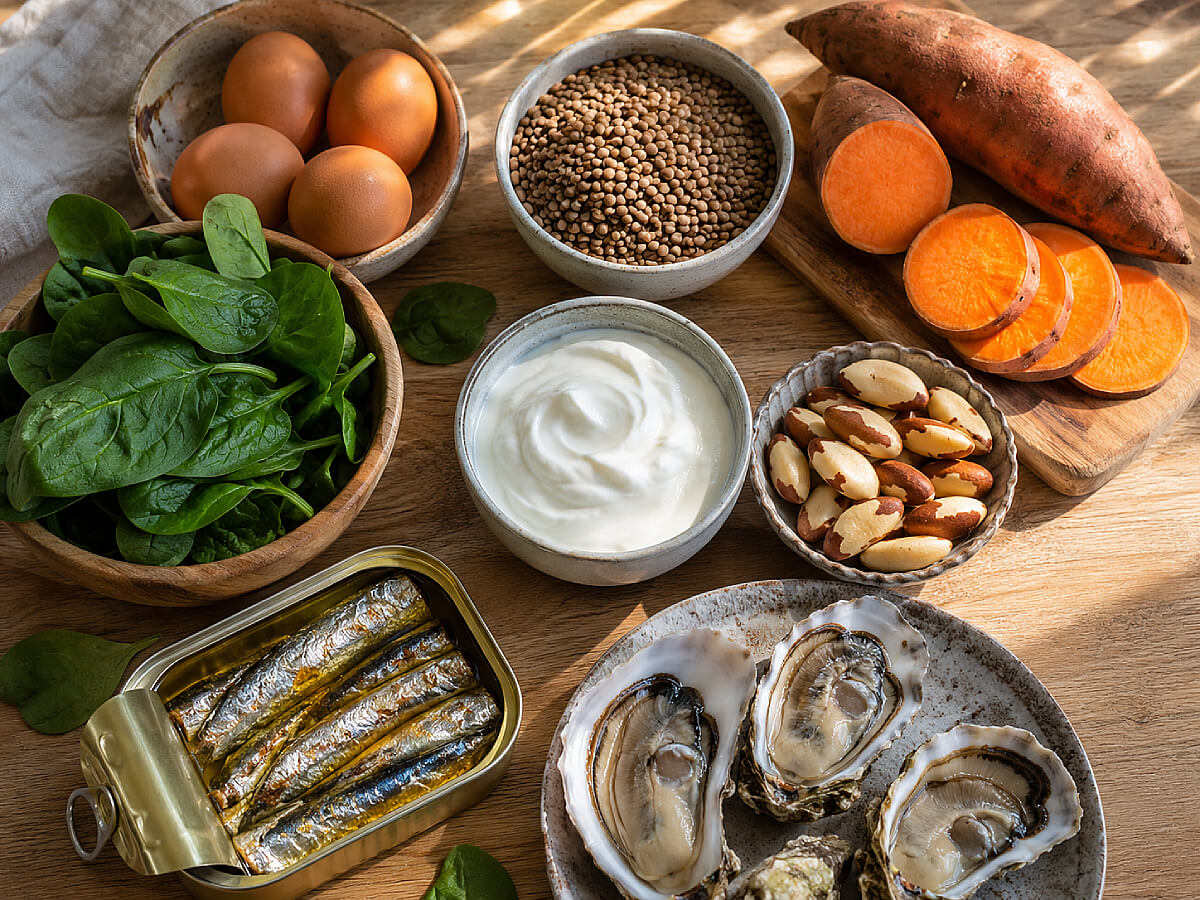

Question from Deborah Langstrom, Flagstaff, Arizona: “I’ve been dealing with thinning hair and breakage for about two years now and honestly I’m at my wit’s end. My stylist keeps recommending expensive treatments but I can’t afford to keep up with them. Someone mentioned that what I eat might actually be part of the problem. Is that true? Are there really foods that can make a difference for hair loss and damage? I’d love a list of things I can actually try at home without spending a fortune.”
Deborah, I hear you, and I want to start by saying you are not imagining it. The connection between what you eat and what happens to your hair is one of those things that gets glossed over constantly in the salon world, and it genuinely shouldn’t. I’ve had clients sitting in my chair for years who have spent hundreds of dollars on keratin treatments, bond builders, scalp serums, and all kinds of things, and the second they cleaned up their diet and started paying attention to nutrition, their hair changed in a way that no product on my shelf ever achieved for them. Not immediately, because hair doesn’t work that fast, but steadily, visibly, in a way that actually stuck around.
I got interested in the diet and hair connection after going through a rough patch myself about eight years ago. I was working insane hours, eating terribly, mostly surviving on coffee and whatever I could grab between clients, and my own hair started shedding in a way that frightened me. I remember running my fingers through it one morning and just feeling this hollow, lightweight quality that it never had before. A dermatologist eventually told me my ferritin levels were in the basement. I didn’t need a prescription. I needed to eat. That experience changed how I talk to every single client who comes in with thinning or breakage, because sometimes the answer isn’t on a product shelf at all.
This post may contain affiliate links, meaning I may earn a small commission at no extra cost to you. I only share products I truly believe in. As an Amazon Associate, I earn from qualifying purchases. Your support helps me continue creating free content like this.
8. Brazil Nuts and the Selenium Connection Nobody Takes Seriously Enough
Most conversations about hair-healthy foods lead with the big hitters, protein and iron, and those are important, but I want to start somewhere a little less obvious because selenium deficiency is more common than people realize and it shows up in the hair in a really specific way. When a client comes in with hair that feels brittle all the way down the shaft, not just at the ends, and their scalp looks a little flaky even though they wash regularly, selenium is one of the first things I think about now.
Brazil nuts are genuinely one of the more remarkable foods for this. A single Brazil nut, just one, can get you to your entire daily recommended value of selenium. The mineral plays a role in the production of selenoproteins, which are involved in protecting your hair follicles from oxidative stress, and low levels have been linked in studies to hair loss and changes in hair texture. I started keeping a small jar of them at my station as a snack, partly because I’m always forgetting to eat on busy days, and it became a whole conversation piece because clients started asking what I was eating and I’d get to explain it.
The thing to know about selenium is that more is not better here. This is one nutrient where it’s actually easy to go overboard with supplements and tip into toxicity, which is why I’d rather you eat two or three Brazil nuts a day than reach for a high-dose selenium supplement without talking to your doctor first. Food sources are gentler and more self-limiting. You can find raw or roasted Brazil nuts on Amazon if you can’t find a good bulk option locally. For a food that asks so little of you, the payoff is actually pretty significant when you’re deficient.
7. Eggs, and Why I Think They Deserve More Credit Than Trendy Supplements
Here’s something I’ll say directly: the supplement industry has done a spectacular job convincing people that biotin capsules are the answer to hair loss, and while biotin does matter, eggs contain biotin naturally along with protein, zinc, selenium, and a handful of B vitamins all in one tidy little package. Biotin supplements became such a cultural moment, every influencer was pushing them, and meanwhile eggs were sitting there being perfectly nutritious and largely ignored by the hair growth conversation.
The protein piece matters a lot here, specifically because hair is made almost entirely of a protein called keratin, and if you aren’t eating enough protein your body will deprioritize hair growth in favor of keeping your organs running, which is exactly what it should do but it means your hair pays the price first. Eggs are a complete protein, meaning they contain all the essential amino acids, which is actually kind of rare for a single food. I went through a period when I was eating mostly plant-based and I noticed my hair felt different, thinner somehow, less resilient when I’d style it. Adding eggs back in made a difference I felt within a couple of months.
The yolk specifically contains most of the biotin and fat-soluble nutrients, so please don’t do the egg white thing in the name of cutting calories, at least not every single day. The whole egg is where the value is. You don’t need anything fancy here, just regular eggs from wherever you shop. If you want to know whether pasture-raised eggs actually have better nutritional profiles, some research suggests they do contain higher levels of certain vitamins, so if it’s in your budget, pasture-raised options are worth exploring. But truly, any egg is better than no egg when it comes to your hair.
6. Fatty Fish and What It Actually Does to Your Scalp
Salmon gets all the glory but let’s be honest, sardines and mackerel are just as good and cost a fraction of the price, and for someone like Deborah who is trying to make dietary changes without blowing a budget, that matters. The omega-3 fatty acids in these fish are what the hair conversation is really about, and specifically their anti-inflammatory effect on the scalp. Chronic scalp inflammation is one of those quiet contributors to hair thinning that almost nobody talks about outside of a dermatology office, and it can be happening without any visible redness or itching.
Omega-3s, specifically EPA and DHA, help regulate the oil production in your scalp, reduce inflammation around the follicle, and there’s some evidence they may even extend the growth phase of the hair cycle. I’ve had clients with chronically dry, itchy scalps who added two to three servings of fatty fish per week and came back telling me their scalp just felt different, less tight, less flaky. That tracks with what the research suggests.
If you genuinely don’t eat fish, algae-based omega-3 supplements are a legitimate alternative because that’s actually where the fish get their omega-3s in the first place. But if fish is on the table for you, canned sardines packed in olive oil are one of the most affordable and nutrient-dense foods you can add to your routine. I eat them on whole grain crackers embarrassingly often. For a quality fish oil supplement option if you’re going the supplement route, something like Nordic Naturals fish oil is one I’d trust based on their third-party testing standards.
5. Spinach and the Iron Situation That Changes Everything
Going back to my own story for a second, when my ferritin levels tanked and my hair started shedding, iron was the culprit. And I was a person who thought I ate reasonably well. The tricky thing about iron deficiency as it relates to hair is that you can be “technically” within a normal range on a standard blood panel and still have ferritin levels low enough to cause shedding. Ferritin is the stored form of iron and it seems to be particularly important for hair follicle function. A lot of doctors don’t flag low-normal ferritin as a problem, but a lot of dermatologists who specialize in hair loss will.
Spinach is one of the better plant-based sources of iron, and it also brings folate, vitamin A, and vitamin C to the table, the vitamin C being relevant because it actually helps your body absorb the non-heme iron found in plants more efficiently. Eating spinach with a source of vitamin C, a squeeze of lemon in your sauté, some tomatoes in a salad, makes the iron more bioavailable, which is a real thing and worth paying attention to.
I want to be honest about plant-based iron though: it is less efficiently absorbed than iron from animal sources, so if you’re vegetarian or vegan and dealing with significant shedding, it’s really worth getting your ferritin checked rather than just eating more spinach and hoping for the best. Spinach is genuinely valuable and I eat it most days, but if your levels are very low you may need to supplement under medical guidance. A product I’ve seen recommended often for iron supplementation is Floradix liquid iron, which is gentler on the stomach than most iron pills and absorbs well.
4. Sweet Potatoes and Why Vitamin A Is a Two-Sided Conversation
Sweet potatoes are rich in beta-carotene, which your body converts to vitamin A, and vitamin A is genuinely important for the scalp because it helps produce sebum, your scalp’s natural conditioning oil. Without enough sebum, the scalp gets dry, the hair gets brittle, and the environment around the follicle isn’t quite right for healthy growth. So yes, sweet potatoes are on my list and I think they belong here.
But here’s the part that usually gets left out: vitamin A in excess, specifically from preformed vitamin A supplements rather than beta-carotene from food, has actually been linked to hair loss. It’s one of those nutrients where the window between deficient and excessive is narrower than people expect. This is exactly why getting it from sweet potatoes, carrots, or butternut squash makes more sense than reaching for a high-dose retinol supplement. Your body is smarter than a pill bottle in this regard, it converts beta-carotene to vitamin A based on what it actually needs rather than just dumping a massive dose into your system.
I roast sweet potatoes constantly and I’ve started thinking of them as scalp food, which is a weird way to frame a vegetable but it helps me stay consistent. The color of a sweet potato, that deep orange, is actually the beta-carotene you’re seeing, so the more vibrant the color the more you’re getting. I’ll sometimes pick up a bag of organic sweet potatoes when I’m doing a big grocery run, just because they keep for a while and I know I’ll use them. Roasted with olive oil and a little sea salt, they’re genuinely one of my favorite easy dinners and my hair has been better for it.
3. Oysters and the Zinc Factor That Most Women Are Missing
Zinc is one of those minerals that comes up in almost every hair loss conversation among dermatologists and trichologists, and it’s consistently one that women, particularly women over forty, tend to be low in. Zinc is involved in hair tissue growth and repair, it helps keep the oil glands around the follicle working properly, and zinc deficiency has been pretty consistently associated with a type of hair loss called telogen effluvium, which is that diffuse, all-over shedding that can happen after stress or illness or a nutritional shift.
Oysters are the richest food source of zinc by a significant margin, which is fun to mention in conversation because people always look surprised. They are not a food most people are eating regularly, I understand that, but even a small serving of oysters a few times a month can make a meaningful contribution to your zinc intake. For more everyday zinc sources, pumpkin seeds are genuinely excellent and much more practical for most people’s real lives. I keep a bag of pepitas in my car most of the time, which says a lot about how much I snack between clients.
Beef, cashews, chickpeas, and lentils are all solid zinc sources as well, and lentils have the added benefit of bringing protein and iron along. If you want to go the supplement route, zinc picolinate and zinc bisglycinate are generally considered the most absorbable forms, and something like Thorne Zinc Picolinate is one I’ve seen recommended by integrative practitioners fairly consistently. That said, zinc also has an upper limit where it starts causing problems, so more is not always more here either, supplementing at reasonable doses rather than megadosing is the way to go.
2. Greek Yogurt and the Protein Conversation That Goes Deeper Than You Think
Plain Greek yogurt is something I recommend so often I’ve started to feel almost boring about it, but the reason I keep coming back to it is that it delivers a real hit of protein in a form that’s accessible, affordable, and genuinely easy to eat every day without feeling like you’re on a diet. And protein is foundational to hair health in a way that no topical product can compensate for. I’ve said this to clients so many times: you cannot deep condition your way out of a protein deficiency. It just doesn’t work like that.
Hair follicles are among the most metabolically active cells in the body, meaning they have significant nutritional needs and they’re sensitive to shortfalls. When dietary protein drops, the body can shift more hairs into the resting phase of the growth cycle, which leads to increased shedding a few months down the line. That delay is part of why it’s hard to connect cause and effect, you stop eating well in January and your hair starts noticeably shedding in March or April, and by then you’ve forgotten about the dietary slip.
Greek yogurt also brings vitamin B5, which you might see on product labels as panthenol, the same ingredient that gets added to a lot of shampoos and conditioners for its moisture-retaining properties. Getting it internally is a different thing entirely from coating the outside of your hair shaft with it. A brand like Fage Total 0% or 2% is what I personally buy because the protein content is high and the ingredient list is basically just milk and cultures. I eat it most mornings with some walnuts and a drizzle of honey, which also happens to cover a couple other nutritional bases at once.
1. Lentils, the Most Underrated Hair Food You’re Probably Not Eating
If I could only tell you to add one food to your diet for your hair, it would be lentils, and I know that’s not the glamorous answer but hear me out. Lentils bring together protein, iron, zinc, folate, and biotin all in one inexpensive, easy-to-cook, incredibly versatile package, and that combination of nutrients hits almost every major driver of nutritional hair loss simultaneously. There is no single supplement that does what a cup of cooked lentils does, at least not without a fairly complicated and expensive stack, and lentils cost almost nothing.
I started eating lentils seriously about five years ago when I was going through a period of trying to reduce my grocery spending without tanking my nutrition, and within a few months I noticed my hair felt different, thicker at the root, less fragile when I was styling it. I didn’t connect it immediately, but looking back at what had changed in my diet, lentils were the most consistent new addition. Now I make a big pot of them on Sundays and eat them through the week in soups, over rice, mixed into salads.
The folate in lentils is worth mentioning separately because folate supports rapid cell division, which is exactly what’s happening in your hair follicles during the growth phase. Low folate has been associated with premature hair graying and slower growth in some research, so it’s not a nutrient to overlook. Red lentils cook the fastest if you’re someone who finds lentils intimidating, they break down in about fifteen to twenty minutes with no soaking required. If you want to explore different varieties or grab a bulk bag to keep costs down, dried lentils in bulk are widely available and will genuinely last in your pantry for a long time. This is the most practical, most impactful dietary change I know of for hair health and it costs maybe two dollars a week.
A Few Last Thoughts Before You Head to the Grocery Store
The thing I want Deborah, and everyone reading this, to take away is that hair responds slowly but it does respond. You’re not going to eat a bowl of lentils on Monday and notice anything different by Friday. Hair grows about half an inch a month and the follicle changes you make through nutrition today will show up in your actual hair several months from now, which is frustrating but also means that consistency matters far more than perfection. You don’t have to overhaul your entire diet overnight. Adding two or three of these foods regularly, making them a genuine habit rather than a week-long experiment, is how this actually works.
I’d also say, gently but seriously, if you’re experiencing significant shedding or noticeable thinning, please get bloodwork done before you try to fix it on your own through food alone. Thyroid function, ferritin, vitamin D, and zinc are the ones I’d specifically ask your doctor to check. Food is powerful and real and I believe in it, but it works best when you know what you’re actually working with. And if everything checks out and it’s just a matter of better nutrition, then this list is a genuinely good place to start.
You deserve to feel good about your hair, and sometimes the most effective place to begin is right in your own kitchen.