
Reader Question from Deborah Kowalski, Flagstaff, Arizona:
“I’ve been straightening my hair almost every day for about three years and lately it just looks… wrong. It’s frizzy even when it’s supposed to be smooth, it breaks off when I brush it, and the ends look like they belong on a completely different person’s head. My stylist mentioned heat damage but didn’t really explain what that means for my long-term hair health or what I should have done differently. Can you help me understand what actually happened and what I can do now?”
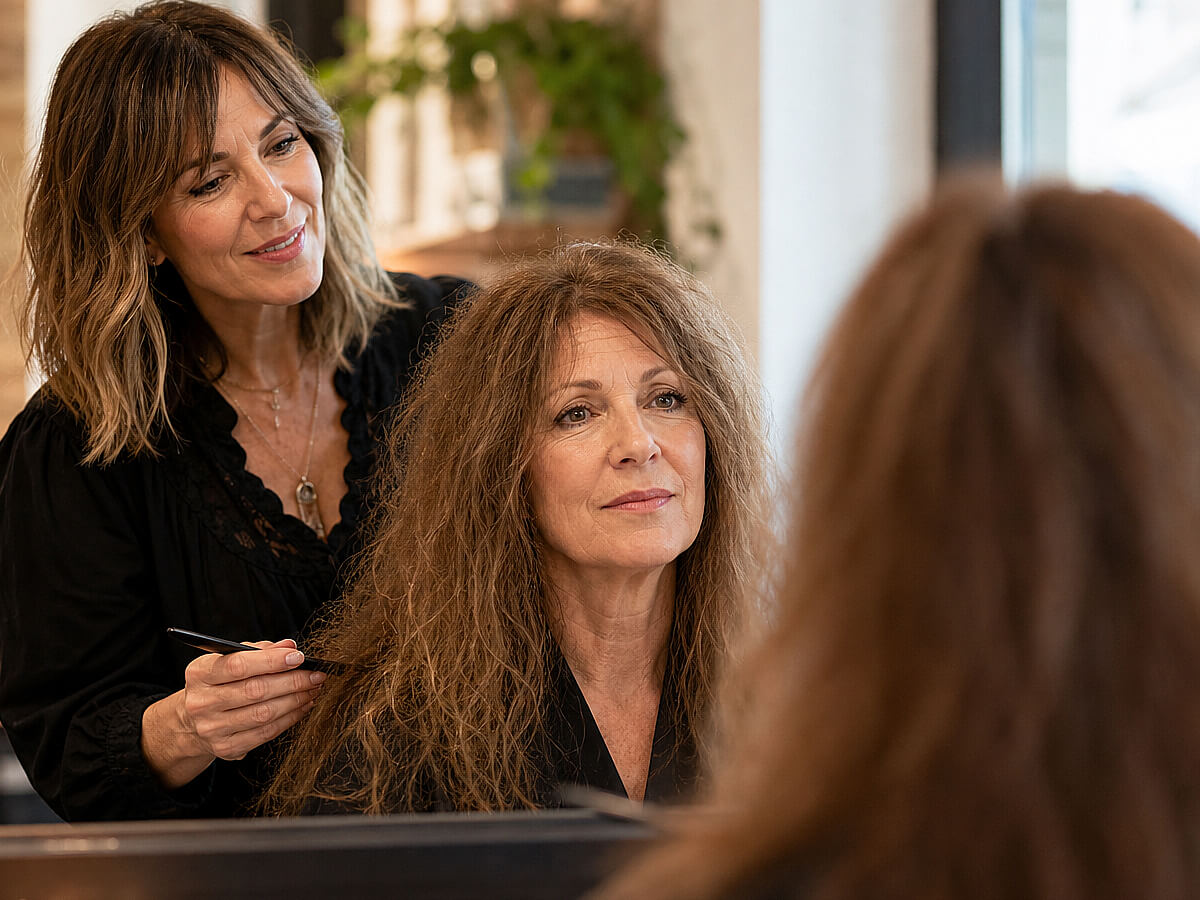
Here’s something I think about more than I probably should: the moment a client sits down in my chair and I run my hands through their hair for the first time, I can usually tell the whole story before they say a single word. The porosity, the texture, the way it moves or doesn’t move, the little halo of breakage around the crown that they’ve been smoothing over with dry shampoo and hope. Heat damage has a particular feel to it, almost like the hair has gone a little hollow, and once you know what you’re touching, you can’t unknow it.
I’ve had this conversation so many times over the years, and I genuinely don’t think it’s ever the client’s fault, not really. We sell women the dream of effortless smoothness and then hand them a 450-degree tool without much context. The straighteners got more powerful, the tutorials got faster, and nobody really sat down to explain what’s happening to that protein structure every single morning. So I want to do that now, in the way I’d do it if you were sitting in my chair and we had an hour and nowhere to be. Because understanding what you wish you’d done differently is genuinely the most useful thing I can offer you if your hair is already struggling, and it’s the most preventative thing I can offer if it isn’t yet.
This post may contain affiliate links, meaning I may earn a small commission at no extra cost to you. I only share products I truly believe in. As an Amazon Associate, I earn from qualifying purchases. Your support helps me continue creating free content like this.
6. They Used Heat Every Day Without a Real Recovery Window
I’m going to start here because it’s the one that feels the most obvious in hindsight but genuinely doesn’t register until the damage is done. Daily heat styling, even with the best tools on the market, even with good protectant, even at a reasonable temperature, is a cumulative stressor on the hair shaft. The cuticle doesn’t fully recover between sessions. It’s like doing a hard workout every single day without a rest day and then being surprised when your body breaks down. Your hair is the same idea, and for women over 40 especially, the hair tends to have less natural moisture to begin with, so the margin for error is just thinner.
What I wish more of my clients had known earlier is that you don’t have to go cold turkey on heat to make a real difference. Even two or three days a week off from the flat iron, or switching to a diffuser on low on those off days, genuinely gives the cuticle time to calm down. I’ve seen hair transform in a couple months just from that one change alone, nothing else different. The women who do best are the ones who build in recovery days the same way they’d build in a rest day from the gym, intentionally, not just when they’re too tired to style. If you’re someone who genuinely can’t imagine leaving the house without your hair straightened, that’s actually worth sitting with for a minute, because it might mean the styling routine has become load-bearing in a way that’s costing your hair more than you realize.
A good air-dry leave-in can be your best friend on those off days. I really like the It’s a 10 Miracle Leave-In for this because it doesn’t weigh fine or medium hair down and it gives you enough slip that air-drying doesn’t turn into a frizz situation. It’s not a miracle in the dramatic sense but it does exactly what it says on the label, which in the product world is actually kind of rare.
5. They Trusted the Temperature Dial Without Questioning It
Okay, this one I have a real opinion about and I’ll just say it: the fact that most flat irons go up to 450 degrees is a design choice, not a recommendation. I don’t know who decided the maximum setting should be the default setting but I’ve spent years undoing what that assumption does to people’s hair. Four hundred and fifty degrees is appropriate for approximately zero percent of the clients I see in my chair. Even very coarse, thick, resistant hair usually doesn’t need more than 380, and most fine to medium hair is doing fine at 350 or even lower with a slow, steady pass.
The women who come in with the worst heat damage are almost always the ones who figured out that higher heat got the job done faster, and then just… left the dial there. I understand the logic completely. You’re busy, the highest setting works, why change it. But what’s actually happening at those temperatures is that you’re not just smoothing the cuticle, you’re essentially cooking the protein structure of the hair, and once that happens, no amount of conditioning is going to reverse it. Protein treatments can help the hair behave better, but the structural damage is real and it doesn’t un-happen.
If you’re investing in a quality iron, look for one with precise temperature control rather than just a sliding dial, because there’s a big difference between 380 and 410 and a vague dial doesn’t tell you where you actually are. The ghd Platinum+ flat iron is one I recommend a lot because it maintains a consistent 365 degrees and doesn’t let you accidentally crank it up, which for a lot of people removes the temptation entirely. It’s an investment but it’s genuinely worth it compared to the cost of repairing heat damage, or losing length you’ve spent years growing.
4. They Skipped the Protein and Moisture Balance Conversation
Here’s something I don’t think gets explained well enough outside of a salon setting: your hair needs both moisture and protein to stay healthy, and they work against each other if you get the ratio wrong. Too much moisture without enough protein and your hair gets soft and stretchy in a bad way, kind of mushy, no elasticity, just limp. Too much protein without enough moisture and it gets stiff and brittle and starts snapping. Heat-damaged hair almost always needs a deliberate, rotating approach to both, and most people are just guessing based on which product sounds most appealing on the shelf.
I’ve had clients come in who’d been doing a deep conditioning mask every single week for months and wondering why their hair kept breaking. The mask they were using was beautifully moisturizing, lovely ingredients, smelled amazing, but it had zero protein. Their hair was over-moisturized and structurally empty, essentially. Once we introduced a protein treatment like Aphogee Two-Step into the rotation every few weeks, things started turning around relatively quickly. That one does need to be used carefully because it’s strong, but for hair that’s genuinely compromised from heat, it can be genuinely clarifying to feel the difference it makes.
What I usually tell people is to think of it like a diet: you’re not eating only protein or only carbs, you’re rotating them in a way that makes sense for how your body feels that week. Your hair gives you signals too. If it feels mushy and dull, it probably wants protein. If it feels stiff and snappy, it probably wants moisture. Learning to read those signals takes a little time but once you’ve got it, you’ve got it for life, and your product routine stops being guesswork and starts being responsive.
3. They Kept Applying Products on Top of Buildup
I want to talk about clarifying shampoo for a second because it is one of the most underused tools in at-home hair care and I genuinely don’t know why it became something people are afraid of. I think somewhere along the way the message that sulfates can be drying got conflated with all cleansing being bad, and now I see clients who haven’t properly clarified their scalp or strands in months and they’re wondering why their treatments aren’t working, why their hair feels coated, why the moisture they’re putting in doesn’t seem to absorb.
When you’re heat styling regularly, product buildup accumulates faster than you’d think. Heat protectants, leave-ins, serums, dry shampoo if you’re using it between washes, it all layers up, and eventually your hair can’t absorb anything you’re putting on it because it’s essentially wearing a film. A good clarifying wash once every two to four weeks depending on how much product you use can make everything else you do work better. I like the Ouai Detox Shampoo for most of my clients because it clarifies without stripping aggressively, and it smells like something you’d find at an expensive hotel, which is never a bad thing.
What I’ve noticed is that women who add a monthly clarifying treatment into their routine tend to see their other products perform noticeably better within a wash cycle or two. It’s not glamorous advice. It doesn’t involve a new technique or a special tool. But it’s one of those things where once you experience the difference, you’ll wonder why no one made a bigger deal of it sooner. Clear the slate, then condition. That’s the order. Conditioning on top of buildup is like moisturizing over a layer of sunscreen. It just sits there.
2. They Waited Too Long to Get a Real Trim
I know this feels counterintuitive because when your hair is already struggling, the last thing you want is to cut more of it off. I’ve had this exact conversation so many times, sitting with someone who’s been nursing split ends for months hoping they’ll calm down, and I have to gently explain that split ends don’t calm down, they travel up the shaft, and the longer you wait, the higher up the damage goes, and the more length you ultimately lose when you do finally come in. It’s a genuinely cruel irony but it is the reality of how hair behaves.
There’s also something emotionally important about getting a real trim when your hair is damaged, something I don’t see written about often enough. When you’re sitting with hair that looks and feels bad, it affects how you feel about yourself in a way that’s quiet but persistent. A good trim, even removing just an inch or two of the most compromised ends, can make hair that’s still growing in healthy actually look and feel like it’s working again. The weight of damaged ends is gone, the frizz at the bottom calms significantly, and your healthy hair gets a chance to actually show up. I’ve seen women leave my chair after a trim looking ten years younger not because I did anything dramatic but because the damaged part was finally gone and what was left had room to breathe.
If you’ve been putting off a salon visit because of the cost or because you’re worried they’ll take too much, that’s a real concern and a fair one. Bring photos of what length you want to maintain. A stylist who listens will work with you. And honestly, a decent pair of hair shears for small between-visit dustings of the ends isn’t a bad investment if you’re disciplined about only taking tiny amounts off the very bottom. Kitchen scissors are not the same thing, please don’t use kitchen scissors.
1. They Never Found a Heat Protectant That Actually Worked for Their Hair Type
Okay, here’s the one I think matters most, and honestly the one I wish someone had explained to me earlier in my career because even I had to learn this the long way: not all heat protectants are created equal, and more importantly, not every heat protectant is right for every hair type. This sounds like something a company would say to sell you more products, I know, but it’s genuinely true and it makes a real difference.
The way heat protectants work is by coating the hair shaft with a barrier that absorbs and distributes heat rather than letting it penetrate directly into the cortex. But the weight and formulation of that coating matters a lot depending on your hair texture. A thick, creamy protectant on fine hair is going to weigh it down and potentially make it greasier and limper, which means you compensate by using higher heat to get the iron to close the cuticle, which is exactly what you were trying to avoid. Meanwhile someone with thick, coarse hair using a lightweight mist might not be getting enough coverage for what their hair actually needs at even a moderate temperature.
I’ve tried a lot of these over the years, both on myself and on clients. The one I come back to most consistently for fine to medium hair, which is the texture I see most often, is the Kenra Platinum Silkening Mist. It goes on light, it actually works, and it doesn’t turn into a greasy residue by end of day. For thicker or more coarse hair that needs more protection and is doing more labor-intensive straightening, the Moroccanoil Perfect Defense is worth the price. I’ve also had really good results with the TRESemmé Thermal Creations Heat Tamer for clients on a budget who are doing a straightening routine rather than anything curly-friendly, it’s not fancy but it covers the bases well.
What I really want to emphasize here is application. You need to actually coat all of the hair, not just mist the top layer, and you need to let it absorb or mostly dry before the iron touches it. A wet heat protectant plus a hot iron is one of the faster ways to cause damage because you’re essentially steaming the hair from the inside. Give it thirty seconds. Comb it through if you can. That step alone, that’s the one that closes the gap between someone who uses heat protectant and someone who uses it effectively. And for women whose hair is already compromised, that gap is everything.
So Is There Actually a Way Back From Heat Damage?
Here’s my honest answer: yes and no, and the ratio depends on how far along the damage is. Truly compromised hair, hair that’s lost its elasticity, that snaps when you stretch it gently, that’s gone mushy or completely lost its wave or curl pattern, that hair needs to be grown out and cut away over time. There isn’t a product or treatment that reverses structural damage and anyone who tells you otherwise is selling you something I’d be skeptical of. But if you’re catching it in the middle, if things feel dull and dry and brittle but haven’t fully broken down, there’s actually a lot you can do to stabilize and improve things while the healthier new growth comes in.
The combination I’ve seen work best is this: lower your heat, take days off from it when you can, clarify monthly, rotate protein and moisture treatments thoughtfully, get your ends trimmed on a reasonable schedule, and actually match your heat protectant to your hair. None of these are dramatic. None of them require a total lifestyle overhaul. But together they change the trajectory, and for a lot of women, seeing the trajectory change is the thing that gives you the motivation to keep going with it.
Pamela, I hope this helps. Your hair isn’t past saving, I really don’t think it is. It’s just asking you to change the conversation you’re having with it. And if you can make peace with that, the next year of your hair’s life is going to look a lot different than the last three.