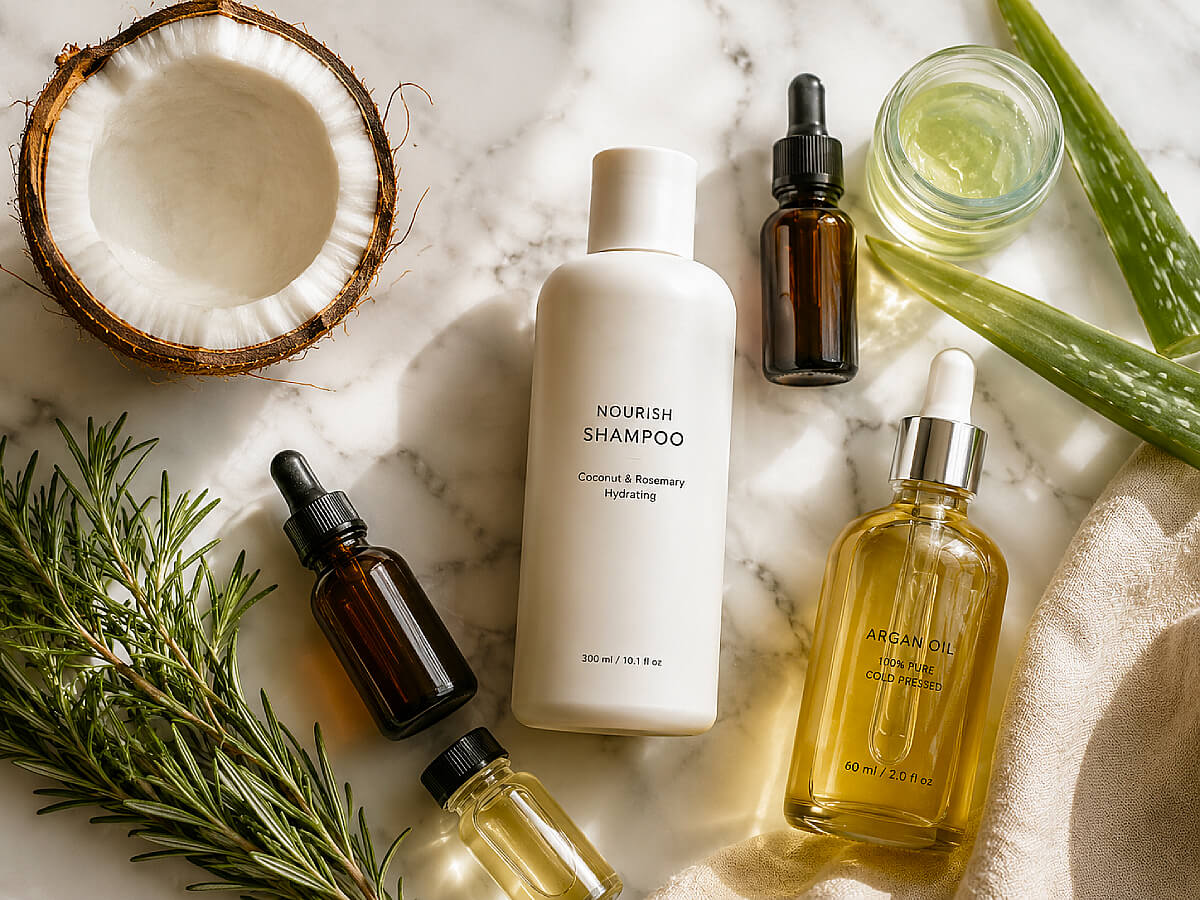

From Patricia Holloway, Bozeman, Montana: “I’ve been using the same drugstore shampoo for years and honestly can’t afford to overhaul my whole routine right now. But my hair has been feeling so dry and flat lately, especially with the hard water here. Is there anything I can just add directly to my shampoo to give it a boost without buying a whole new product line?”
Patricia, I love this question so much because it’s exactly what I tell clients in the chair who are trying to stretch their budget without sacrificing results. You don’t always need a $40 bottle of something fancy. Sometimes the smartest thing you can do is work with what you already have.
I’ve been a hairstylist for many years, and one of the things I’ve learned is that most people are one or two ingredients away from their best hair days. Literally one small tweak to your existing routine can change the texture, the shine, the manageability, all of it. I do this myself, honestly. My bathroom shelf is not as glamorous as people probably imagine. I buy a basic sulfate-free shampoo and I customize it depending on what my hair needs that week, because what your hair needs in January is not what it needs in July.
So let’s talk about what you can actually add to your shampoo bottle, right now, with things you can find at the grocery store, the pharmacy, or online, and what each one actually does.
This post may contain affiliate links, meaning I may earn a small commission at no extra cost to you. I only share products I truly believe in. As an Amazon Associate, I earn from qualifying purchases. Your support helps me continue creating free content like this.
10. A Few Drops of Glycerin
Glycerin is one of those ingredients that doesn’t get nearly enough credit in the casual hair care conversation, and I think it’s because it sounds like something you’d find in a chemistry lab rather than a beauty routine. But this stuff is genuinely useful, especially if you live somewhere dry, or if your hair tends to feel stiff and brittle after washing rather than soft and bouncy.
What glycerin does is pull moisture from the air into the hair shaft. It’s a humectant, which is a fancy word for something that attracts and holds onto water. If your hair feels dry and flat by midday even right after washing, that’s often a moisture retention problem more than a moisture application problem. You’re getting water in during the wash, but it’s leaving just as fast.
I started adding a small amount of vegetable glycerin to my shampoo years ago after a client with 2C waves mentioned her stylist in Atlanta had suggested it. I was skeptical, but I tried it on myself first, the way I always do before I recommend anything. Within two washes I noticed my hair felt less like straw after blow drying. It was subtle, but it was real.
The key is not going overboard. A few drops, maybe half a teaspoon for a medium-length hair, mixed right into your palm with the shampoo before applying. If you use too much it can leave a slightly tacky feeling, which is not what anyone wants. You can find vegetable glycerin on Amazon for just a few dollars, and a small bottle lasts forever. This one is especially good for fine hair that can’t handle heavy oils because it adds moisture without weight.
9. Rosemary Essential Oil
Okay, so rosemary oil has had its moment in the spotlight over the last couple of years, and I’ll be honest, I was a little eye-rolly about it at first because anything that blows up on social media I automatically approach with some skepticism. But then I started actually paying attention to the research, and there’s a legitimate study comparing rosemary oil to minoxidil for hair growth that got a lot of people’s attention for good reason.
The short version is that rosemary oil appears to stimulate the scalp and improve circulation, which can support hair growth and reduce shedding over time. It’s not a miracle, and it’s not going to reverse significant hair loss on its own, but for women who are noticing their hair feeling thinner or shedding more than usual, especially around perimenopause or after a period of stress, adding a few drops to your shampoo is one of the lowest-effort things you can try.
I had a client, probably around 58, who came to me frustrated because her hair had been noticeably thinner for about a year. She’d already talked to her doctor, everything was fine hormonally, it was just one of those things. We adjusted her cut to work with the density she had, and I suggested she start adding rosemary oil to her shampoo. About three months later she came back and said she felt like she was seeing baby hairs along her hairline again. I’m not making any medical claims here, but that’s her experience, and I’ve heard similar stories from several clients since.
Look for a 100% pure rosemary essential oil, something like Maple Holistics or Handcraft Blends, and add about five drops per wash. Don’t go above ten drops, essential oils are potent and more is genuinely not better with them.
8. Apple Cider Vinegar
This one I want to frame correctly because I’ve seen people go way too aggressive with apple cider vinegar and end up with hair that’s more damaged than when they started. So bear with me, because when used correctly it’s actually a really useful addition to your shampoo, particularly if you’re dealing with hard water buildup, dull hair, or an itchy scalp.
The pH of your hair and scalp sits around 4.5 to 5.5, which is slightly acidic. Most shampoos, especially older formulas, tend to be more alkaline, which can rough up the hair cuticle and lead to frizz and that dull, straw-like appearance. Apple cider vinegar is acidic enough to help bring the pH back down and smooth the cuticle, which is why hair looks shinier after using it. It also helps break down hard water mineral deposits and product buildup in a way that most shampoos don’t.
Patricia specifically mentioned hard water, and this one is for her. Hard water is genuinely tough on hair because the minerals, mainly calcium and magnesium, bind to the hair shaft over time and leave it feeling coated and heavy no matter how much you shampoo. A diluted rinse or a small amount mixed into shampoo can make a noticeable difference.
The ratio matters: I suggest about one tablespoon of raw apple cider vinegar with the mother, like Bragg’s, mixed into a quarter-sized amount of shampoo. Do this once a week, not every wash. Used too frequently it can be drying, especially on color-treated hair. The smell dissipates once it rinses out, I promise.
7. Argan Oil
Argan oil is not a trend. I know it had its trend era, the early 2010s when every product suddenly had “Moroccan oil” in the name and cost twice as much because of it, but the actual oil itself has been used for centuries for a reason. When you’re adding it directly to shampoo rather than applying it as a finishing oil, you get a different effect. It’s more about the wash experience and leaving the hair a little more protected and conditioned than your baseline shampoo provides.
What I like about argan oil specifically for a shampoo additive is that it’s light enough not to weigh down most hair types, including hair that leans fine or tends to go limp with product. It’s rich in oleic acid and vitamin E, both of which support the hair’s lipid layer, meaning the outermost coating that keeps moisture in and environmental damage out. If your hair has been colored, permed, or heat-styled regularly, that lipid layer is likely compromised, and argan oil is genuinely good at helping shore it back up.
I use a dropper bottle of pure argan oil on my own hair, a couple drops in my shampoo on wash days when I know I’m going to blow dry and style right after, because it makes a real difference in how the hair behaves under heat. My ends thank me for it. Look for 100% pure cold-pressed argan oil, brands like Pura D’or or Leven Rose are solid, not the blended versions that have added fragrance and silicones.
6. Aloe Vera Gel
Aloe vera is one of those things I keep coming back to, especially for clients with sensitive scalps or anyone who deals with scalp irritation, redness, or that tight itchy feeling after shampooing. A lot of shampoos, even ones marketed as gentle, still have ingredients that are mildly irritating to some people’s scalps, and the aloe helps buffer some of that.
Beyond the soothing effect, aloe vera has a composition that’s surprisingly hair-friendly. It’s high in proteolytic enzymes, which sounds alarming but basically means it gently removes dead skin cells from the scalp, which can help with flaking without the harshness of a dedicated dandruff shampoo. It also has a naturally low pH, similar to apple cider vinegar but gentler, so it helps smooth the cuticle a bit.
For curly and wavy hair types, adding a small amount of aloe to shampoo can help retain more of the hair’s natural curl pattern after washing. I’ve had clients who were struggling with their waves going flat after shampooing and this was part of what helped them get more consistent results. It doesn’t define curl the way a gel or cream would, but it sets up the hair to respond better to whatever you apply after.
Use pure aloe vera gel, not the bright green kind with added dye and fragrance, something like the Organic Aloe Vera Gel by Seven Minerals or similar, and mix about a teaspoon into your shampoo before lathering.
5. Castor Oil
Castor oil is thick. Noticeably thick, almost weirdly so compared to other oils, and that’s actually what makes it useful for certain things. I don’t recommend it for everyone as a shampoo additive because if you have fine, flat, or oily hair, it might be too much. But for thick hair, coarse hair, natural hair, or anyone dealing with dry ends and scalp issues simultaneously, it’s worth knowing about.
Castor oil is high in ricinoleic acid, a fatty acid that has both moisturizing and anti-inflammatory properties. It’s been traditionally used for hair growth and scalp health, though the research is less dramatic than the rosemary oil data. What I can tell you from experience is that clients with naturally coarse or thick hair who add a small amount to their shampoo notice their hair feels more manageable and less porous after washing, which means it absorbs styling products better.
One of my long-term clients has 4B natural hair and she’s been adding a combination of castor oil and rosemary oil to her shampoo for about two years now. She says it’s the single biggest change she made to her routine and her hair retains length better than it used to. I can’t take credit for that recommendation, she figured it out herself and told me about it, which is honestly how a lot of my best knowledge comes from, my clients.
Opt for Jamaican Black Castor Oil, the Tropic Isle Living brand is well-regarded, and start with just a few drops until you know how your hair responds. A little goes a long way here.
4. Niacinamide (Vitamin B3)
This might be the most underrated thing on this entire list and I’m a little surprised it doesn’t come up more in the hair care conversation, because it’s been a star ingredient in skincare for years and the scalp is just skin. Niacinamide, also known as vitamin B3, supports the skin barrier, reduces inflammation, and helps regulate oil production, all of which translate meaningfully to scalp health.
If you have a scalp that tends toward oiliness at the roots but dryness at the ends, which is incredibly common and incredibly frustrating, niacinamide can actually help rebalance that. It works on the sebaceous glands in a way that helps normalize sebum production over time, meaning you might find yourself able to go longer between washes if you use it consistently.
You can buy pure niacinamide powder or a concentrated serum, something like The Ordinary Niacinamide 10% + Zinc works well here, and add a small amount to your shampoo, maybe an eighth of a teaspoon of powder or a few drops of serum. It has no scent and no texture, so it doesn’t change the shampoo experience at all. What it does is work quietly in the background and over a few weeks you might notice your scalp just feels less reactive and your hair has more even texture root to tip.
3. Tea Tree Oil
If there is one essential oil I recommend with the most confidence for scalp-related concerns, it’s tea tree. Not because it’s the most glamorous option, but because it actually works and the evidence for it is stronger than for most other topical scalp treatments. It’s antifungal, antibacterial, and anti-inflammatory, and it addresses three of the most common scalp complaints at once: dandruff, scalp acne, and general irritation and itchiness.
The main cause of dandruff is a yeast called Malassezia that lives on the scalp of pretty much everyone but overgrows in some people due to hormones, stress, diet, or a naturally oilier scalp. Tea tree oil disrupts that yeast without stripping the scalp the way harsh medicated shampoos often do. For women who’ve been relying on Head and Shoulders or similar products but don’t love how drying they are, adding tea tree to a gentler base shampoo is often a better long-term approach.
I personally add about eight drops of Tea Tree Essential Oil by Handcraft or similar to my shampoo during summer when my scalp tends to get more reactive from heat and sweat. I’ve also recommended it to clients who work out frequently and wash their hair often but don’t want to strip their color. It does the job without being harsh, and the cooling sensation is honestly a nice bonus.
Do not apply undiluted tea tree oil directly to the scalp, it needs to be mixed into something. Always dilute it in your shampoo or a carrier oil first.
2. Vitamin E Oil
Vitamin E is one of those workhorses that shows up in just about every good hair product and usually isn’t the headline ingredient, but it’s often doing a significant amount of the actual work. As an antioxidant it helps neutralize free radical damage from sun exposure, pollution, and heat styling, which over time is genuinely aging for both the scalp and the hair strand itself. Adding it directly to your shampoo means you’re getting that protection right at the wash stage, before any of the other products even go on.
For women with color-treated hair especially, vitamin E is worth paying attention to because oxidative damage is one of the main reasons color fades and hair loses its vibrancy faster than you’d like. The antioxidant protection helps slow that process down, which means your color lasts a little longer and your hair holds onto its shine better between salon visits.
I’ve been using pure Vitamin E oil capsules from brands like NOW Foods or Solgar for years, just puncture one or two capsules and squeeze the oil right into your shampoo before lathering. It’s almost embarrassingly simple for how effective it is. I think about it the same way I think about taking a daily vitamin, it’s not dramatic, it’s just maintenance, and maintenance is what keeps hair looking good for the long haul.
It also supports scalp circulation and can help with the same kind of slow, steady improvement in hair density that rosemary oil supports, so if you wanted to stack these two together in your shampoo, that’s not a bad idea at all.
1. Coconut Milk
Out of everything on this list, coconut milk is the one I come back to most consistently for clients who want one easy addition that addresses the most ground at once. It’s protein, it’s fat, it’s moisture, and it happens to smell wonderful. For dry, damaged, color-treated, or heat-styled hair, this is genuinely the place I’d start if I could only choose one thing.
Coconut milk is different from coconut oil in an important way. The milk contains both the oil and the water from the coconut, which means it delivers fatty acids and moisture simultaneously, and it does it in a form that the hair absorbs more readily than straight oil. It’s also naturally rich in proteins that help temporarily fill in damage along the hair cuticle, which translates to smoother, shinier hair after every wash. Not a permanent repair, nothing truly is, but a real improvement you’ll feel when you run your hands through your hair.
I started recommending this to clients probably six or seven years ago after a period where I was experimenting a lot with natural additive ingredients and wanted to find something with broad appeal, meaning something that would work on different hair types and textures without needing a ton of customization. Coconut milk is the thing that worked across the board, from thin and fine to thick and coarse, from natural curls to chemically straightened.
Use full-fat canned coconut milk, the kind you’d find in the cooking aisle, not the coconut milk beverage in a carton which is too diluted to be useful here. Something like Thai Kitchen or Native Forest organic coconut milk works perfectly. Add about two tablespoons to your shampoo, lather as usual, and let it sit for a minute or two before rinsing. Your hair will feel the difference immediately, and by the second or third wash your texture will start to reflect it more deeply. Store the leftover coconut milk in the fridge and use it within a few days, or freeze it in small portions so nothing goes to waste.
A Few Quick Notes Before You Start Mixing
The question of which of these is right for you comes down mostly to your specific concern and your hair type, and the honest answer is that a little experimentation is part of it. Start with one addition at a time so you can actually tell what’s making a difference. Give it at least three or four washes before you draw any conclusions, because a single wash rarely tells you much.
Also, if you’re using a shampoo with sulfates or a very stripping formula, some of these additions won’t be as effective because the base is working against you. It doesn’t have to be expensive, but a gentle sulfate-free shampoo gives you a better canvas. Something like SheaMoisture Manuka Honey and Mafura Oil shampoo or even Pura D’or Original Gold Label is a good starting point.
Patricia, your instinct to work with what you have instead of overhauling everything is honestly a smart one. Some of the best hair days I’ve ever had came from a basic shampoo and one or two well-chosen additions, not from a shelf full of products promising to change your life. Pick the one that addresses your most pressing concern, whether that’s the dryness, the flatness, or the hard water issue, and start there. You might find that’s all you need.